 Sedona City Guide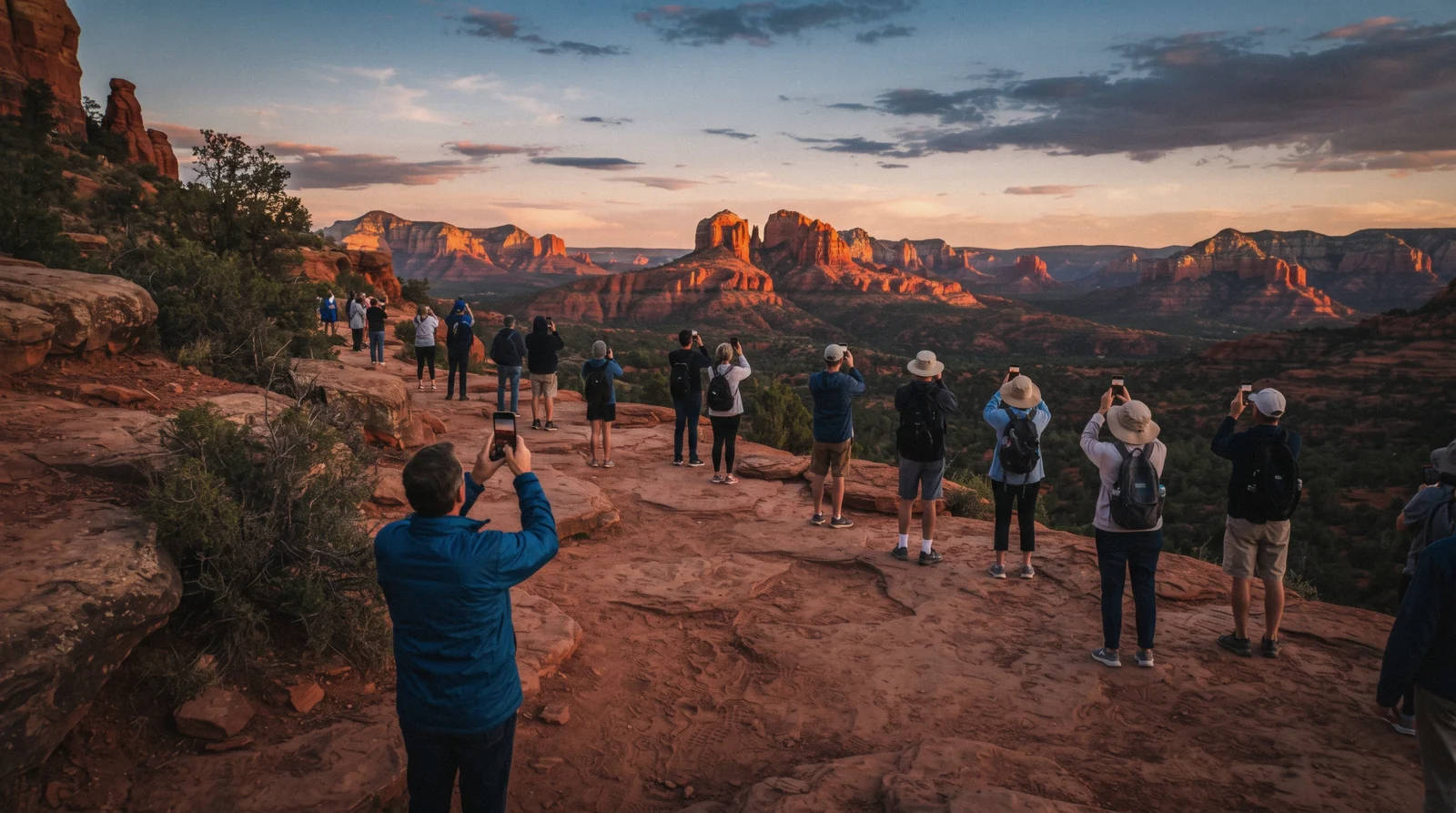
Is Sedona Worth Visiting?
Is Sedona worth visiting? Yes: a Forest Service parking pass that costs $5 for the day puts you at the foot of sandstone buttes that took ten million years of uplift and erosion to shape, and most of the town's headline views sit inside a twenty-minute walk of a trailhead. That is the whole case in one sentence. This page is part of the guide's answer for everything else worth planning; it does not repeat the sight list, which lives on things to do in Sedona, and it does not settle the day count, which lives on how many days in Sedona. It gives the honest yes, the real frustrations with the figures attached, and the visitor who should book somewhere else instead.
Quick answer The straight yes, the real caveats, and who should skip it
Sedona is worth visiting: a $5 daily parking pass reaches red rock formations most travelers cross an ocean to see photographs of, and the geology needs no ticket, no timed slot and no guide to appreciate from a pullout. The honest caveats are three: beds and jeep tours cost more than the parking does, the town has no walkable centre and almost nothing moves without a car, and the vortex-tourism marketing on the main strip is a tone some visitors find overdone before they have parked once.
Key takeaways
- Two full days is the honest minimum and three is comfortable: the length question with what fits at each count is answered on how many days in Sedona
- Most Forest Service trailheads run on the Red Rock Pass at $5 a day; Slide Rock and Red Rock State Park charge their own separate fee on top
- The cheapest way to test the appeal in person is a two-hour pink jeep tour from $99; the widest first look is the open-air van tour with six stops
- If your decision hangs on what there actually is to see, the ranked list with prices is things to do in Sedona; this page deliberately does not restate it
The Case For: Geology You Reach for $5
The argument for Sedona is short and it is almost entirely about access: the formations are close, the parking is cheap, and none of it requires a booking.
A standard Red Rock Pass costs $5 for the day, $15 for the week or $20 for the year and covers the Forest Service's standard fee trailheads: not every site (a handful of concessionaire-managed sites, and both state parks, charge separately), but most of the well-known ones. That $5 is the entire admission cost for red rock scenery that has no equivalent gate anywhere else in the country: sandstone laid down as an ancient seabed and river system, iron-oxide staining giving it the color, then ten million years of uplift and erosion carving the buttes, spires and canyons a visitor drives past on the way into town. The Red Rock Pass page has the full list of which trailheads need it and which do not.
The town also holds an International Dark Sky Community designation, awarded in 2014 as the world's eighth: a fact that says something concrete about how little light pollution competes with the rock at night, and the reason the stargazing tours sell well after dark. Nothing about the formations, the light or the sky needs a ticket, a timed slot or a guide: a pullout on SR-179 with a Red Rock Pass on the dashboard is most of the experience for most visitors, for less than the price of a fast-food lunch.
The Case Against: Cost, Crowds and a Car You Can't Put Down
None of the frustrations below are secret, and none of them are fatal, but the figures are real and worth seeing before you book.
Parking is cheap; almost nothing else is. A guided jeep tour into the backcountry, which is how most first-time visitors actually experience the formations up close, starts around $99 for two hours and climbs past $175 for a longer or private trip. The two state parks add their own fee on top of any Forest Service pass you already hold, and one of them is seasonal:
| What it costs | Amount | What that buys | Where to check it |
|---|---|---|---|
| Red Rock Pass, daily | $5 | Standard Forest Service trailheads | Red Rock Pass |
| Red Rock Pass, weekly | $15 | Same trailheads, seven days | Red Rock Pass |
| Slide Rock State Park, per vehicle | $30, stepping to $20 on Aug 21, 2026 | Entry to the park and the natural water slide | Slide Rock tickets |
| Red Rock State Park, adult | $10 (child $5, under 6 free) | Entry and the ranger-led nature program | Red Rock State Park |
| Shortest pink jeep tour | from $99 | About two hours in the backcountry | #tour-10 |
What a Bed Adds
Layer a bed on top of the parking fee and a comfortable trip stops being a $5-a-day proposition; the line-by-line arithmetic for a full day's budget belongs on what Sedona costs, not repeated here, but the parking fee is never the number that decides whether the trip is expensive.
The Calendar and the Lots
The National Weather Service fixes the monsoon flash-flood window at June 15 to September 30 every year, and its own warning language names Oak Creek and Sycamore Canyons directly as the places where "raging killer currents" are possible in side canyons and narrow slots. No agency publishes how many cars a given trailhead lot holds, which is itself the tell: the honest answer to "will there be a space" is that small lots fill early on a clear weekend, and the free Sedona Shuttle only runs Thursday to Sunday, 7am to 5:30pm, to five named trailheads: Cathedral Rock, Little Horse, Soldier Pass, Dry Creek Vista and Mescal. Show up on a Tuesday, or at a trailhead the shuttle does not serve, and a full lot is entirely your own problem.
A Drive-Everywhere Layout
There is no walkable centre here the way there is in a European old town: Uptown, the main trailheads and the restaurants in Tlaquepaque sit spread along highway corridors, connected chiefly by SR-179 and SR-89A, and a visitor without a car depends on the weekend-only shuttle or on paying for a tour to move between any two of them. Getting around Sedona has the detail; the short version is that this is a drive-everywhere town wearing a walkable town's marketing photos.
The Vortex Question
This is the one frustration that is about tone rather than money, and it deserves a straight answer rather than a shrug.
Sedona markets itself hard on energy vortexes: sites where visitors go to meditate, and where a meaningful share of the town's shop fronts and tour listings lean into crystals, healing and spiritual guidance. No agency measures or certifies a vortex site: the Forest Service manages the land the sites sit on and publishes nothing about energy fields, and the claim itself is a belief, not a measurement. What the Forest Service does confirm is which trailheads and formations the belief attaches to, which is why the vortex sites page describes what people actually do there rather than asserting the field is real.
Some visitors find that mix of crystal shops, guided vortex meditations and psychic readings part of the appeal, and a guided vortex jeep tour is consistently one of the better-rated ways to see the formations either way, belief aside. Others find the marketing overdone before they have parked the car once, and no amount of honest framing on this page will change that reaction: it is a matter of taste, not a fact this site can settle for you. If the tone is a dealbreaker, the geology and the trails are still there without ever booking a vortex-branded anything.
Who Should Skip Sedona
An honest yes needs the cases where the answer is no. None of these are failings of the place; they are mismatches.
- You want a walkable town and no car. There is no compact pedestrian centre here; getting around Sedona makes plain that a car, or a paid tour, is how you move between sights most days of the week. - You are on a tight budget and heat-averse in the same trip. The parking is cheap, but jeep tours, lodging and the state-park fees are not, and the only months that avoid both the July-August heat and the peak spring crowds are a narrow window worth checking on best time to visit Sedona. - New Age marketing puts you off before you start. The vortex tone above is not going away; a town built partly around it is not the trip for a visitor who finds the framing eye-rolling rather than charming. - You are visiting June through September and cannot avoid midday heat or the monsoon window. The National Weather Service's own flash-flood dates, June 15 to September 30, apply to the canyons this town is known for, and hiking hours narrow sharply on those months; see hiking safety before you book. - You wanted Grand Canyon-scale scenery on a half-day budget. Sedona's formations are close and cheap to reach, but they are a different scale entirely; the honest comparison and drive-time caveats are on day trips from Sedona.
The Cheapest Ways to Test the Appeal
Four bookings under $150 that answer the worth-it question in person rather than on a page. Prices and ratings are the platform's own figures, checked in Q3 2026.
 from $99
Highest-rated jeep tour under $100 on this page (5.0 average)
from $99
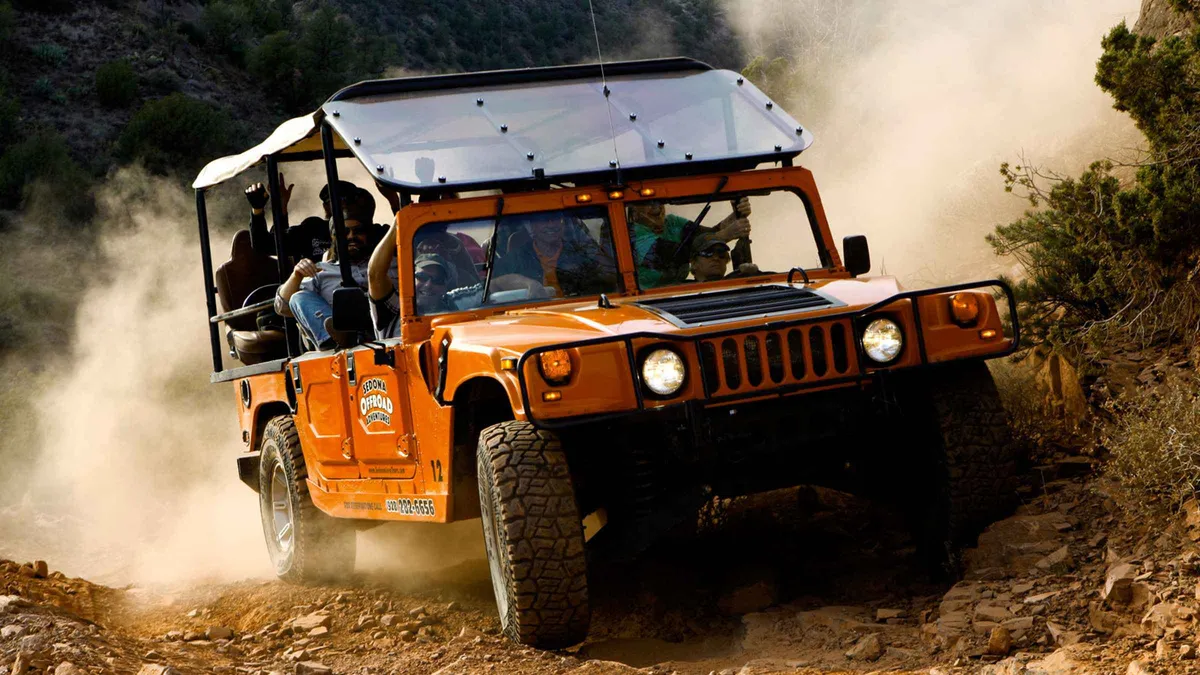
Highest-rated jeep tour under $100 on this page (5.0 average) Sedona: 2-Hour Jeep (Hummer) Tour Cliff Hanger Trail
A 2-hour Hummer run down the exclusive Cliff Hanger Trail, including the steep 'Crack Axle' descent, in a forward-facing vehicle rather than a standard Jeep. Suits thrill-seekers who specifically want the roughest single trail on this list.
Check Availability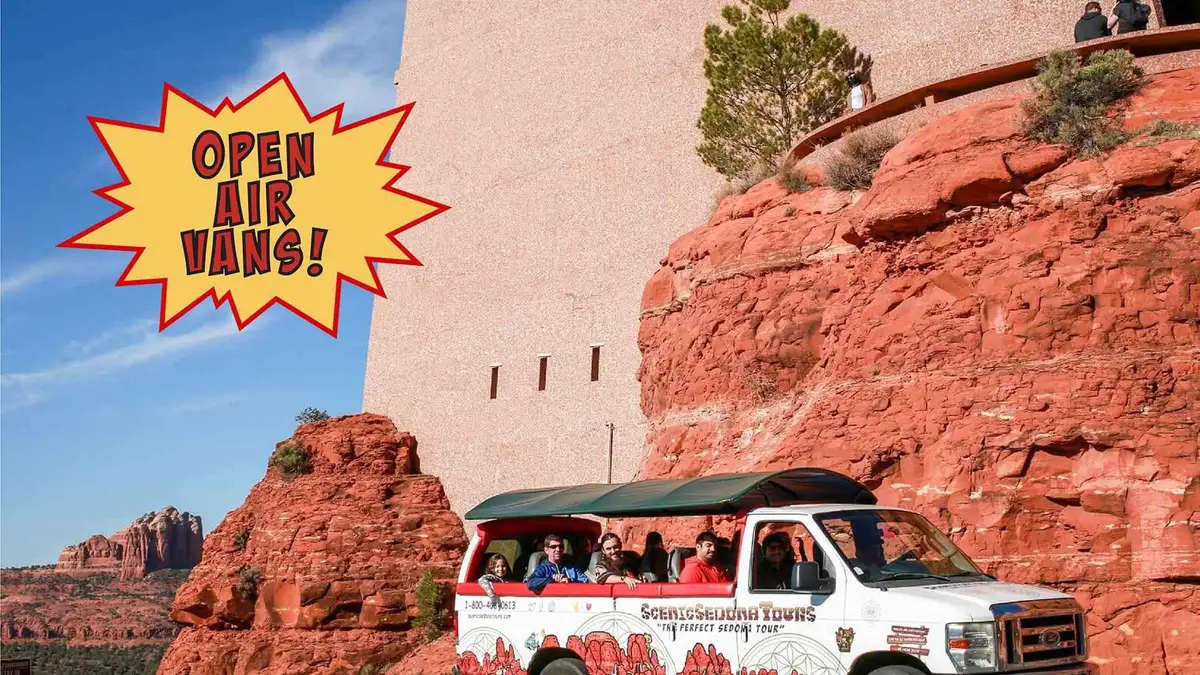 from $126
Most-reviewed sightseeing tour on this page (212 reviews)
from $126
Most-reviewed sightseeing tour on this page (212 reviews) Sedona: Open-Air Van Tour with a Local Guide and 6 Stops
A longer open-air van circuit with six stops mixing sightseeing, shopping and food rather than a single scenic loop. Suits visitors who want to break up the drive with time on foot at each stop.
Check Availability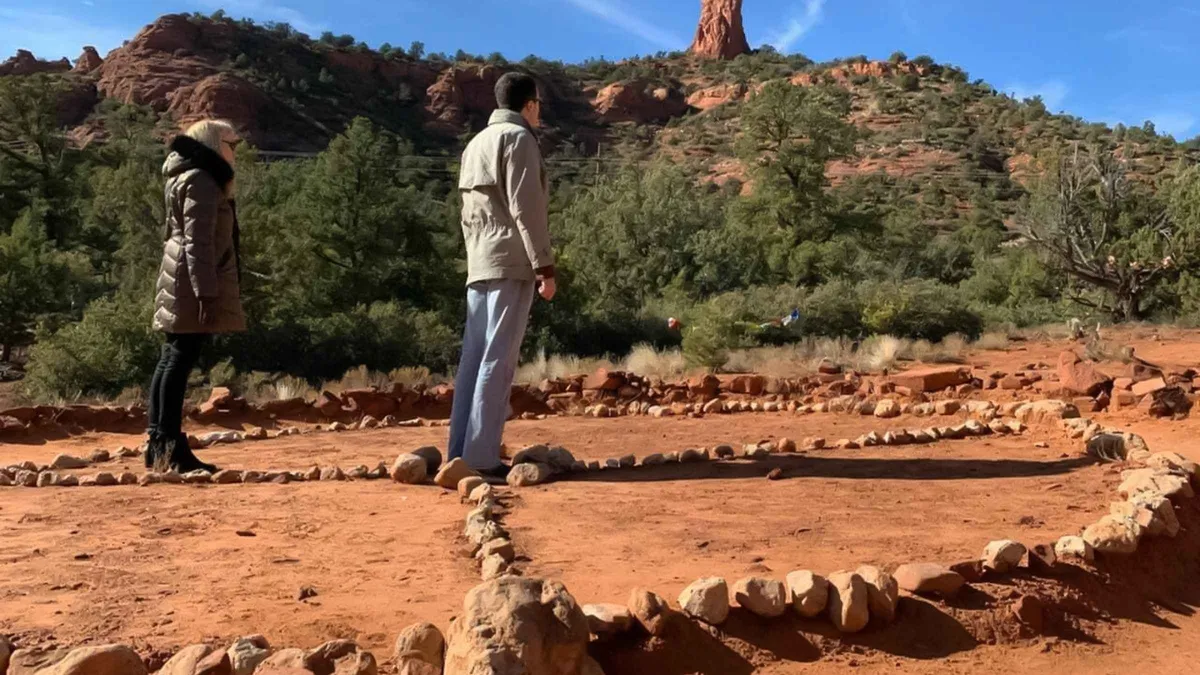 from $123.86
Sedona: Guided Vortex Jeep Tour
A Jeep ride to several vortex sites with time to walk around each one while the guide explains the local vortex lore. Suits visitors curious about the energy-site claims who still want a driven itinerary.
Check Availability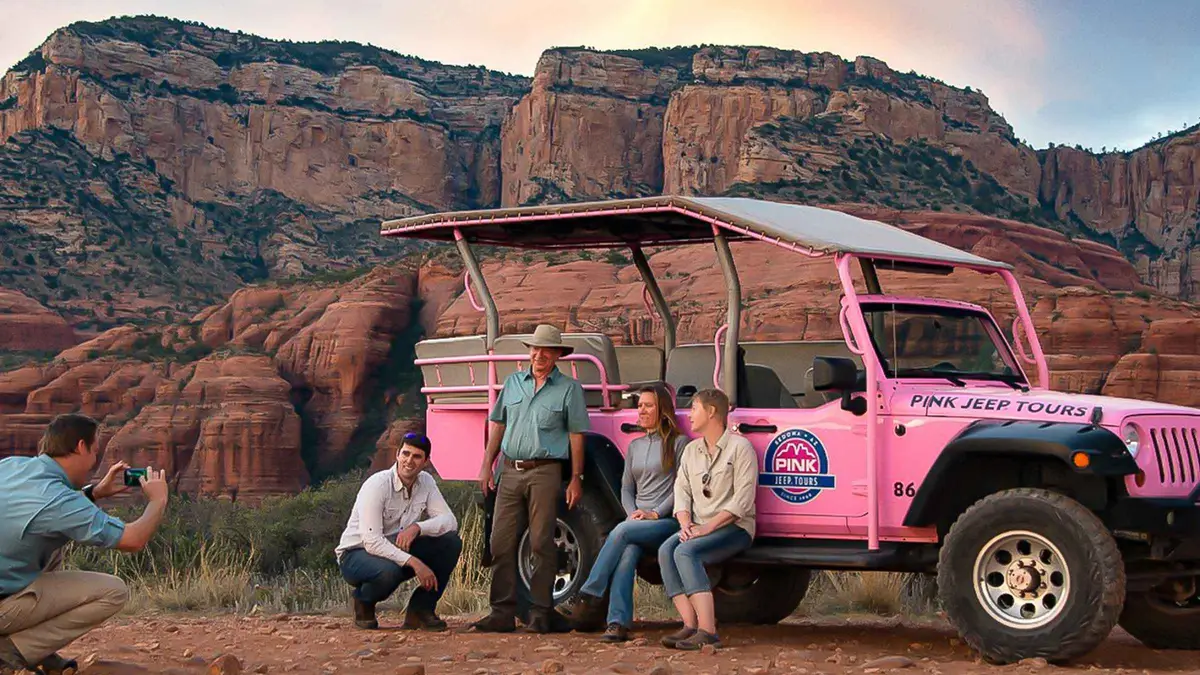 from $111.50
Sedona: Red Rock Range Pink Jeep Tour
A short Jeep run on mild dirt roads west of town to open panoramic viewpoints over Sedona's red rocks, including Thunder Mountain and Bradshaw Overlook. Suits first-time visitors who want scenery without a rough ride.
Check AvailabilityPrices, ratings and details are the platform's own, checked in Q3 2026; dollar figures are the listed prices — the platform bills in your account's currency.
The Pages That Finish the Decision
This page gives the verdict; these four hold the evidence it rests on.
How many days in Sedona
One, two, three or four-plus nights compared on what fits and what it costs: the day count this page deliberately does not settle. How many days in Sedona.
The length questionThings to do in Sedona
Every attraction ranked, priced and mapped: the list this page deliberately does not restate. Things to do in Sedona.
The sight listWhat Sedona costs
The line-by-line arithmetic behind the cost caveats made above. What it costs.
The budgetBest time to visit Sedona
The window that avoids both the summer heat and the spring crowds. When to visit.
The month chooserIs Sedona Worth It: Questions
Is Sedona worth visiting?
Yes. A $5 daily Red Rock Pass reaches sandstone formations shaped over roughly ten million years, and none of it needs a booking. The honest caveats: jeep tours and lodging that cost far more than the parking, a drive-everywhere layout, and vortex-tourism marketing some visitors find overdone, are all real and are all stated plainly on this page with the figures behind them.
Is Sedona overrated?
Only if you arrive expecting a walkable town or a quiet trailhead on a clear weekend with no shuttle service. The geology itself is not overrated: the access is cheap and the formations do not need a filter. What earns the complaint is the traffic on SR-179 and SR-89A and the small trailhead lots that fill early: a timing and logistics problem, not a substance one.
Is Sedona too touristy?
Parts of Uptown and the vortex-tour storefronts lean hard into the marketing, and that strip can feel crowded and commercial. The trailheads themselves thin out fast once you are a mile from a parking lot, and the free Sedona Shuttle (Thursday to Sunday, 7am to 5:30pm) exists specifically because five of the most-visited trailheads have too little parking for the demand.
Why go to Sedona?
For red rock scenery reachable on a $5 parking pass, dark skies good enough to hold an International Dark Sky Community designation since 2014, and a base for day trips to the Grand Canyon and Antelope Canyon that a compact town like this one can support without a long drive to the airport first.
Is Sedona worth visiting if I don't hike?
Partly. A jeep tour or a scenic drive along SR-179 reaches most of the same views without a boot on a trail, and Tlaquepaque and the Chapel of the Holy Cross fill a day with no hiking at all. The core argument for the town is still the geology, though, and skipping the trails means seeing it at a distance rather than from inside it.
Is Sedona worth visiting without a car?
Difficult. The free shuttle covers five trailheads on four days of the week; everything else (Uptown, the state parks, the day trips, the rest of the trailheads) needs a car or a paid tour. A visitor without one should plan around guided tours for every sight rather than assume the town is walkable.
Is Sedona Worth It, on Video
Three videos that argue the question rather than tour the sights: a direct pros-and-cons rundown, a first-timer's honest expectation-setting list, and the counter-argument from a traveler who went in skeptical of the "overrated" label.
Things to Know Before Visiting Sedona | What I Wish I Knew!
Expectation-setting from a returning visitor: most of the frustrations it lists are the ones the cost and geography sections above put figures on.
Video: Wander World JourneysThey Said Sedona Was Overrated. They Were Wrong!
The counter-argument to the 'overrated' complaint, argued from a skeptical starting point rather than a fan's.
Video: The Detour DuoSEDONA ARIZONA Travel Guide: 9 Things to Know Before You Go
A practical nine-point rundown that covers the same parking, heat and driving trade-offs argued on this page.
Video: Yellow ProductionsVideos load from YouTube only when you press play.
Reviewed Q3 2026 (July–September 2026); next review Q4 2026. Prices, hours and terms are set by the venue or operator and confirmed at checkout.
We may earn a commission if you book through one of our links, at no extra cost to you. Full affiliate disclosure