 Sedona City Guide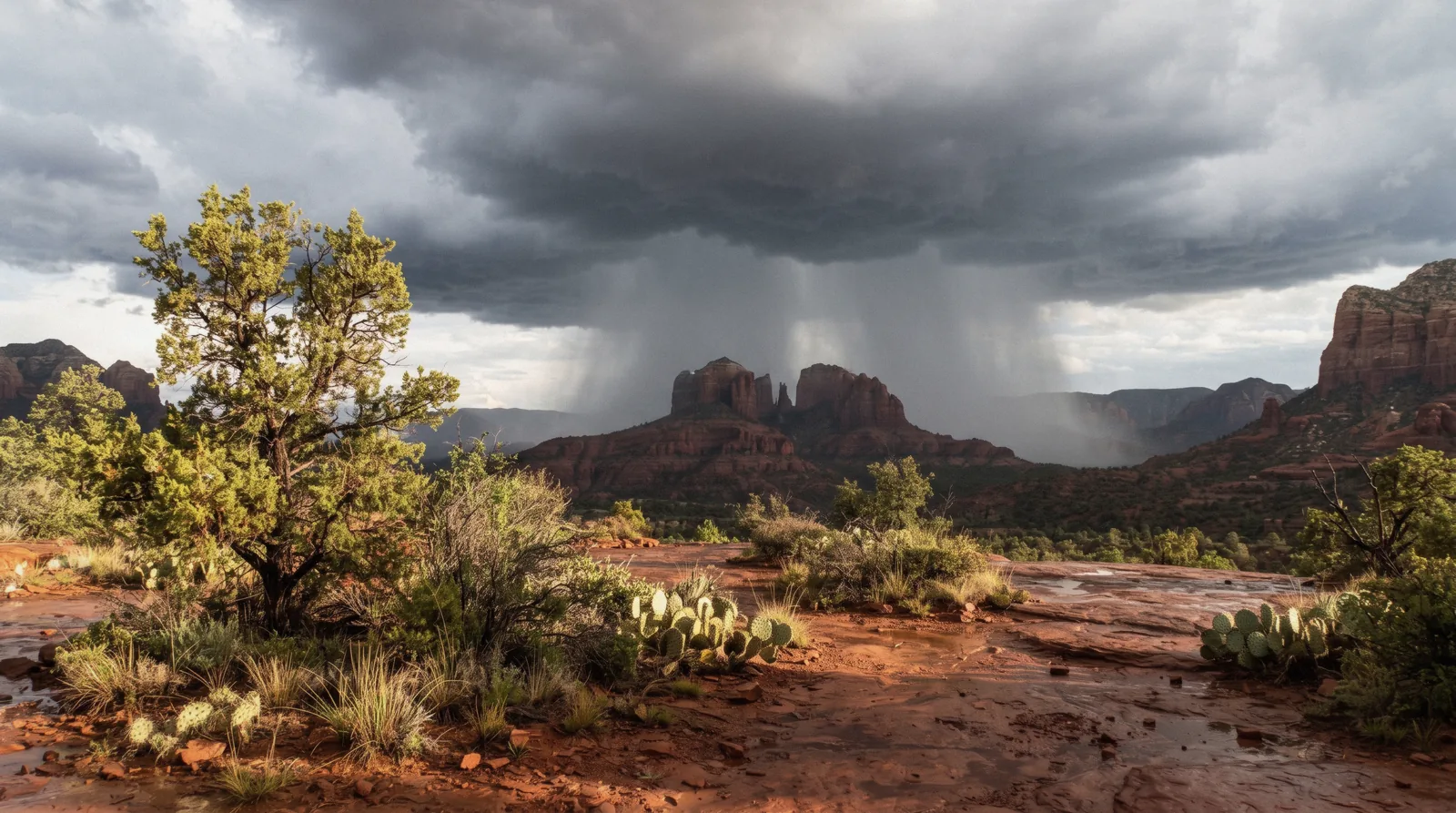
Best Time to Visit Sedona
The best time to visit Sedona depends on a thirty-year weather average computed from the Open-Meteo ERA5 reanalysis archive for 34.87 N, -111.76 W, the closest gridded reconstruction to the town since no first-order National Weather Service station sits inside Sedona itself, read in Q3 2026. The short version: April, May and October carry the mildest highs and also draw the biggest crowds, June through September run hot with a fixed monsoon storm window layered on top, and winter brings the occasional snow on red rock with the emptiest trailhead lots of the year. No agency publishes a monthly visitor count for Sedona, so every crowd claim on this page is this guide's own reading of the parking and weather data, stated as that and nothing more. For the rest of the trip beyond the calendar, the guide's overview of the whole trip covers what to see and where to stay.
Quick answer The mild months, the hot months, the wet window, and the trade-off
April, May and October have the mildest highs of the year, in the low-to-mid 20s Celsius (low-to-mid 70s Fahrenheit), and they are also the three busiest months on this guide's own reading of trailhead parking and search demand. June through September run hot, with July averaging 33.0°C (91.5°F), and the National Weather Service's monsoon window sits inside that stretch on a fixed calendar rule: 15 June to 30 September. Winter is the quiet season, cool by day and below freezing most nights, with snow possible on the red rock itself.
Key takeaways
- Want the mild weather without fighting for a parking spot? See which months are comfortable but not the busiest in the month-by-month table.
- Hiking in June, July or August? Read what the heat actually does to a trail day before you go, and check hiking safety for the water and timing rules.
- Chasing fall color in Oak Creek Canyon? The window is later than most visitors expect, and no agency publishes a peak date in advance.
- A stargazing tour and a half-day hiking tour both run year-round; the guide adjusts the route to the month, not the other way around.
Sedona average high temperature by month
Average daily high temperature by month in Celsius, with the Fahrenheit reading underneath, computed from the Open-Meteo ERA5 reanalysis archive for 34.87 N, -111.76 W over 1 January 1995 to 31 December 2024 (thirty years), read in Q3 2026. This is a gridded reconstruction, not a National Weather Service station normal, because no first-order NWS station sits in Sedona itself.
The chart plots average highs; overnight lows run well below these figures, including below freezing December through February. Full figures, lows and rain, are in the month-by-month table below.
Sedona weather and crowds, month by month
Average high and low temperature, rain days, and this guide's own crowd reading for each month, from the same thirty-year Open-Meteo ERA5 reanalysis series for 34.87 N, -111.76 W, read in Q3 2026. Crowd level is not an official figure; no agency publishes monthly visitor counts for Sedona.
| Month | Avg high | Avg low | Rain days | Crowds (our reading) |
|---|---|---|---|---|
| January | 10.4°C (50.7°F) | -0.9°C (30.4°F) | 6.0 | Low, cold mornings |
| February | 11.9°C (53.4°F) | -0.2°C (31.7°F) | 5.9 | Low to moderate |
| March | 15.7°C (60.3°F) | 2.6°C (36.7°F) | 6.2 | Moderate, building |
| April | 20.3°C (68.5°F) | 6.2°C (43.2°F) | 3.6 | High, peak lot fill |
| May | 25.7°C (78.3°F) | 11.2°C (52.2°F) | 2.9 | High, peak lot fill |
| June | 31.9°C (89.4°F) | 17.0°C (62.6°F) | 2.1 | Moderate, hot and dry |
| July | 33.0°C (91.5°F) | 19.7°C (67.4°F) | 6.4 | Moderate, monsoon storms |
| August | 31.5°C (88.6°F) | 18.5°C (65.3°F) | 6.1 | Moderate, wettest month |
| September | 28.7°C (83.6°F) | 15.6°C (60.1°F) | 4.5 | Moderate, cooling |
| October | 22.7°C (72.8°F) | 9.6°C (49.4°F) | 4.1 | High, fall color |
| November | 16.3°C (61.3°F) | 4.1°C (39.4°F) | 3.6 | Low to moderate |
| December | 10.5°C (51.0°F) | -0.4°C (31.2°F) | 6.2 | Low, holiday week spike |
Rain days count days with measurable precipitation in the same reanalysis series; a wetter month is not necessarily a washed-out one, since Sedona's rain often arrives as a short afternoon storm rather than an all-day front. The holiday week around Christmas and New Year draws a short crowd spike inside an otherwise quiet December, on this guide's own observation rather than a published figure.
The short answer, and the trade-off inside it
April, May and October post the mildest average highs of the year, between 20.3°C and 25.7°C (68.5°F and 78.3°F), cool enough at night for a jacket and warm enough by midday for a full trail. They are also, on this guide's own reading of trailhead demand and lot behavior rather than any published visitor count, the three busiest months: Cathedral Rock and Devil's Bridge both see their lots fill by mid-morning on an April or October Saturday.
The trade-off runs the other way in the shoulder months either side. March and November sit a few degrees cooler, with highs of 15.7°C and 16.3°C (60.3°F and 61.3°F), close enough to the comfortable range for most hikers, and without the same crowd pressure. Weekday mornings in either month are the closest this guide can point to a genuine quiet-and-mild combination, though again, that is an inference from parking and search patterns, not an official crowd count.
Spring: March to May
March opens cool, an average high of 15.7°C (60.3°F) and a low of 2.6°C (36.7°F), with March carrying the highest rain-day count of the spring months at 6.2. April warms quickly to 20.3°C (68.5°F) and the rain drops off sharply, down to 3.6 days with only 23.9 mm for the month. May is the driest month on the whole calendar by rain days, 2.9, and the warmest of the spring run at 25.7°C (78.3°F), edging toward the range where afternoon shade starts to matter on an exposed trail like Bell Rock.
This is also, by this guide's own reading, the busiest run of the year. Spring break traffic overlaps the tail of March, and by April the trailhead lots at the marquee hikes are filling before 9 am on weekends. The free Sedona Shuttle runs Thursday to Sunday and is the practical workaround at its five served trailheads; it does not resolve every lot, and this guide has found no official confirmation either way of whether those lots close to private cars while the shuttle operates.
Summer heat and the monsoon window
June, July and August all average highs at or above 31°C (88°F), peaking at 33.0°C (91.5°F) in July, with lows that stay in the high teens Celsius (mid-60s Fahrenheit) even overnight. There is no shade on most of the slickrock routes around town, and the exposed scrambles, Cathedral Rock's trail among them, turn into a genuine heat hazard by mid-morning. The full water and timing guidance for a summer trail day is on hiking safety; the short version is to start before dawn and be off exposed rock by mid-morning.
Layered on top of the heat is the monsoon: the National Weather Service sets a fixed calendar window for the Arizona monsoon, 15 June through 30 September, not a forecast-driven one. The first weeks typically run quiet, storm activity builds through early and mid-July, August is usually the most active month, and the pattern winds down through September. August also posts the highest rain-day count of the warm months, 6.1, more than double June's 2.1. Afternoon storms can turn a dry wash into a flood hazard within minutes; hiking safety covers which canyons the Weather Service names by name.
The same four months set against the National Weather Service's own fixed monsoon calendar, showing where the heat and the storm risk overlap most:
| Month | Avg high | Rain days | Inside monsoon window? |
|---|---|---|---|
| June | 31.9°C (89.4°F) | 2.1 | Yes, from 15 June, typically quiet at first |
| July | 33.0°C (91.5°F) | 6.4 | Yes, storm activity builds early to mid-month |
| August | 31.5°C (88.6°F) | 6.1 | Yes, usually the most active month |
| September | 28.7°C (83.6°F) | 4.5 | Yes through 30 September, winding down |
Fall color in Oak Creek Canyon: later than it looks on a map
September cools quickly from August's peak, down to an average high of 28.7°C (83.6°F), and October drops further still to 22.7°C (72.8°F), close to the spring comfort range and with a similarly light rain-day count of 4.1. This is also when Oak Creek Canyon turns: the canyon's color comes mainly from bigtooth maples and Arizona sycamores rather than the aspen stands that color Flagstaff's high country earlier in the season, and the display in Sedona's lower canyon runs noticeably later than a Flagstaff foliage report would suggest.
No state or federal agency publishes a peak-color date for Oak Creek Canyon in advance; unlike a national forest's aspen viewing guide further north, this is a canyon that colors on its own schedule and gets reported after the fact rather than forecast. Treat any specific date quoted online as one visitor's account of one year, not a published forecast. October is also, on this guide's own reading, tied with April and May as one of the three busiest months, so a color drive on SR-89A through the canyon is worth timing for a weekday morning rather than a weekend afternoon.
Winter: the quiet season, and snow on red rock
December, January and February are the coldest three months, with highs holding near 10 to 12°C (50 to 53°F) and lows dropping below freezing: -0.9°C (30.4°F) in January, -0.4°C (31.2°F) in December, -0.2°C (31.7°F) in February. Snow on the red rock itself is a real possibility rather than a rarity, since Sedona sits at roughly 1,370 metres (about 4,500 ft, Visit Sedona's own published figure; no USGS benchmark elevation exists for the city itself) and a winter storm crossing the Mogollon Rim can leave a dusting on the buttes that clears within a day or two.
Rain is more frequent than the summer numbers suggest: January and December both post 6.0-plus rain days, more than any month except July and August, though this is nearly all cold-front rain rather than monsoon storms, and snow rather than rain on the coldest days. This is also the quietest stretch of the year for trailhead parking on this guide's own reading, with the notable exception of the week around Christmas and New Year, when the town's own resident and second-home population plus a smaller wave of holiday visitors briefly fill the closer-in lots.
Targeting the shoulder weeks inside the busy months
April, May and October are not evenly busy across their own four or five weeks, on this guide's own reading of the same demand signal behind the crowd column above. The opening days of April still carry some of March's lighter trailhead pressure before spring break traffic fully arrives, and the same easing happens at the tail end of May, after the school-year rush but before the heat pushes highs past the mid-20s Celsius toward June's 31.9°C (89.4°F). October runs the same pattern in reverse: the first week still carries September's slightly higher average high of 28.7°C (83.6°F), and the crowd pressure this guide associates with the month tends to build toward its back half as the color season in Oak Creek Canyon draws attention.
None of this is an official forecast; it is this guide's own reading of how a fixed thirty-year weather average interacts with school calendars and a color season that has no published peak date. The practical takeaway is the same one that applies to any month: a weekday morning start beats a weekend one regardless of which of the twelve months you land on, and the trailhead lot table below gives the season-by-season version of the same advice.
Is there a worst time to visit?
Not in the sense of a month to avoid outright, but two specific combinations are worth knowing about before booking. Mid-July through mid-August stacks the year's two hardest constraints on top of each other: average highs of 33.0°C and 31.5°C (91.5°F and 88.6°F) in July and August respectively, together with the National Weather Service's monsoon window at its most active, per the pattern in the summer section. A hiking-focused trip booked for that exact four-week stretch faces the narrowest safe daily window of the year, mornings only, with an afternoon storm risk on top.
The second combination is the week around Christmas and New Year, covered in the winter section: the coldest average temperatures of the year, lows regularly below freezing, arriving at the same time as this guide's own observed short crowd spike from holiday visitors and the town's own seasonal residents. A visitor who wants winter's quiet trailheads without winter's coldest nights or the holiday-week crowd does better landing in mid-January or February instead. Outside those two windows, the difference between any two months on this page is one of degree, not of a month to be avoided.
What each season does to the trailhead lots
The parking picture changes more by season than the weather does, and it is the single biggest planning variable most visitors miss. This guide's own reading, cross-checked against the free shuttle's published days and hours, not an official capacity count.
Spring and fall crowd the standard fee lots earliest; summer and winter thin them out but shift the pressure to specific hours instead of specific months.
| Season | Typical lot pressure | Shuttle days | This guide's advice |
|---|---|---|---|
| Spring (Mar–May) | Fills by mid to late morning on weekends | Thu–Sun, 7:00 am–5:30 pm | Arrive before 8 am or use the shuttle |
| Summer (Jun–Sep) | Lighter overall, but fills fast at dawn slots | Thu–Sun, 7:00 am–5:30 pm | Go at first light and be off exposed rock by mid-morning |
| Fall (Oct–Nov) | October matches spring's pressure; November eases | Thu–Sun, 7:00 am–5:30 pm | Weekday mornings for the color drive and the popular trails |
| Winter (Dec–Feb) | Quietest overall, except the week around the holidays | Thu–Sun, 7:00 am–5:30 pm | Almost any hour works outside the holiday week |
The free Sedona Shuttle runs on the same Thursday-to-Sunday schedule regardless of season, serving Cathedral Rock, Little Horse, Soldier Pass, Dry Creek Vista and the Mescal trailhead for Devil's Bridge. Whether those five lots are physically closed to private cars while the shuttle runs is not confirmed on any City of Sedona or Coconino National Forest page this guide could find; the published material frames the shuttle as a free alternative rather than stating a car ban. Full detail on parking in Sedona.
Best month, by what you're actually there for
A hiking-focused trip does best in the comfortable months, March through May and September through November, when the average highs sit between 15.7°C and 28.7°C (60.3°F and 83.6°F) and a full-day route does not need to be finished before mid-morning the way a July or August one does. Anyone set on the exposed scrambles like Cathedral Rock should lean toward the cooler end of that range, since the rock itself holds heat.
Stargazing benefits from the opposite trade-off: Sedona's International Dark Sky Community designation, awarded by DarkSky International in 2014, means the night sky is dark year-round, but winter's longer nights and lower humidity give more hours of usable darkness per evening, and clearer air after a winter cold front often outperforms the hazier, monsoon-humid summer sky. A stargazing tour that supplies its own telescopes removes the need to time a moon phase yourself.
A creek swim at Slide Rock only makes sense once the water and air are both warm, which points squarely at June through August despite those being the hottest months on this page; the creek itself is fed by Oak Creek and stays cool even when the air above it is not. The fall color drive through Oak Creek Canyon is a September-into-November question with no published peak date, covered in the fall color section above.
Tours that adjust to the month, not the other way around
Four GetYourGuide listings that run on a schedule rather than a season: a guided hike that shifts its start time for heat or cold, a highlights loop that works any month, and a stargazing tour that is genuinely better once the summer humidity clears. Prices and ratings are the operator's own, checked in Q3 2026.
 from $63
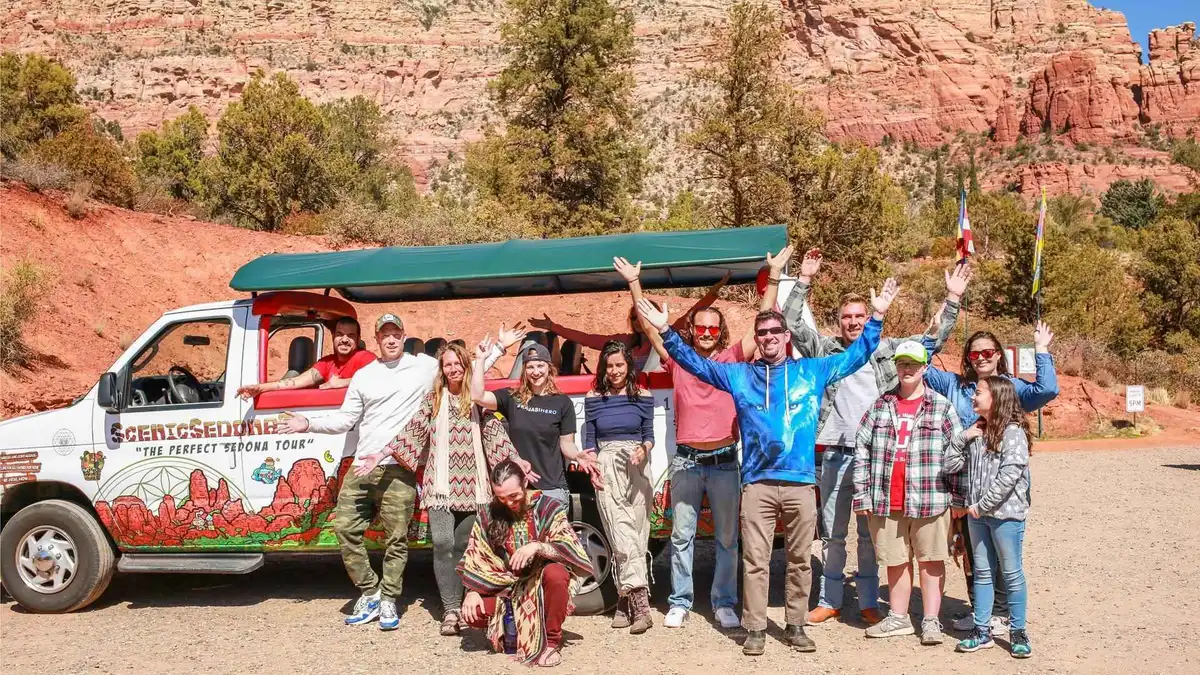
Sedona: The Magic of Sedona Highlights Tour
An open-air bus sightseeing loop with a local guide covering Sedona's geology, vortex claims, and history across several photo stops. Suits visitors who want an overview of the whole town on one short ride.
Check Availability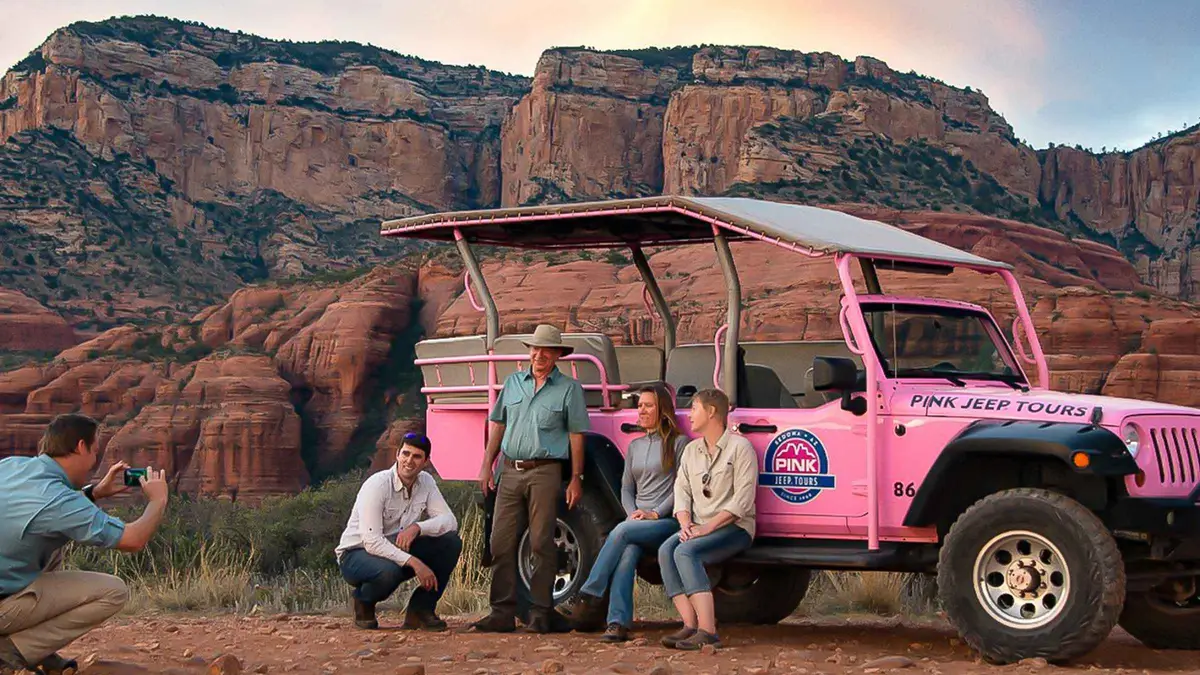 from $111.50
Sedona: Red Rock Range Pink Jeep Tour
A short Jeep run on mild dirt roads west of town to open panoramic viewpoints over Sedona's red rocks, including Thunder Mountain and Bradshaw Overlook. Suits first-time visitors who want scenery without a rough ride.
Check Availability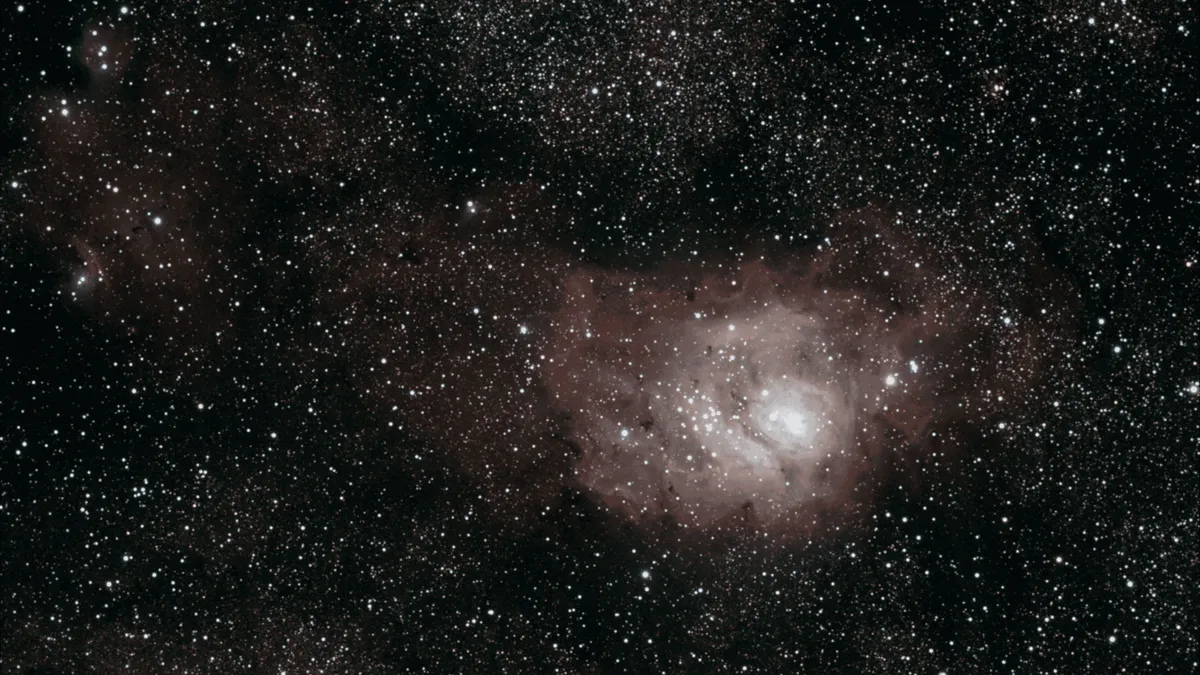 from $125
Sedona: Stargazing Tour with Telescopes and Video Astronomy
A stargazing session using dedicated telescopes and live video astronomy so the group can see the same view on a screen, run by working astronomers. Suits anyone who wants a closer, narrated look rather than naked-eye stargazing.
Check Availability from $123.86
From Sedona: Archeology and Nature Hike
A Jeep ride to a private access point followed by a short, flat 2-mile hike to Native American ruins, positioned as an easier alternative to Palatki or Honanki. The same Sinagua-era dwelling style can be seen without a guide at Palatki Heritage Site, which requires a Red Rock Pass plus a free Recreation.gov reservation.
Check AvailabilityPrices, ratings and details are the platform's own, checked in Q3 2026; dollar figures are the listed prices — the platform bills in your account's currency.
Plan around the season
Where the lots actually fill
The trailhead-by-trailhead detail behind the season table above: parking in Sedona and the free shuttle's exact stops and hours.
Same trailheads, every monthHeat and flash flood rules for a trail day
The National Weather Service's HeatRisk guidance and the named flash-flood canyons: hiking safety.
Matters most June to SeptemberThe color drive itself
What the canyon looks like and where to stop: Oak Creek Canyon.
SR-89A, 20 to 30 minutes from townBest time to visit Sedona: questions
What is the best month to visit Sedona?
April, May and October carry the mildest average highs of the year, between 20.3°C and 25.7°C (68.5°F and 78.3°F). They are also, on this guide's own reading of parking and demand, the three busiest months; the full month-by-month table has every figure.
Is Sedona too hot to hike in the summer?
June through August average highs of 31 to 33°C (88 to 91°F) with no shade on most trails, so a summer hike works only with an early start. Hiking safety has the National Weather Service's heat and water guidance.
When is Sedona's monsoon season?
The National Weather Service sets a fixed window, 15 June to 30 September, with activity typically building in July and peaking in August. See the monsoon table for the month-by-month pattern.
Does it snow in Sedona in winter?
Yes, on occasion. Overnight lows drop below freezing December through February, and a passing storm can leave snow on the red rock buttes that usually clears within a day or two. Details in the winter section.
When is the best time for fall color near Sedona?
Later than most visitors expect, since the canyon colors from bigtooth maples and Arizona sycamores rather than the aspens that turn earlier around Flagstaff. No agency publishes a peak date in advance; see the fall color section.
What is the quietest time to visit Sedona?
December through February, outside the week around Christmas and New Year, on this guide's own reading of trailhead demand. Weekday mornings in March and November are the closest combination of mild weather and lighter crowds.
Is there a worst time to visit Sedona?
Mid-July through mid-August combines the year's hottest average highs, 33.0°C and 31.5°C (91.5°F and 88.6°F), with the monsoon window at its most active. The week around Christmas and New Year pairs the coldest nights with a short holiday crowd spike. See the trade-offs for both.
Sedona by Season, on Video
Three clips covering the month-by-month planning question from different angles.
What is the Best Time to Visit Sedona | Arizona | USA
A season-by-season rundown of weather and crowd trade-offs for a first-time visit.
Video: Arizona BeautyBest Time to Visit Arizona: A Month-by-Month Travel Guide
Puts Sedona's seasons in the context of Arizona's wider climate, including the monsoon window.
Video: Arizona BeautyWhat's The Best Time Of Year To Visit Sedona?
A shorter take aimed at travelers weighing heat against crowds for a Sedona trip.
Video: Everything About PhoenixVideos load from YouTube only when you press play.
Reviewed Q3 2026 (July–September 2026); next review Q4 2026. Prices, hours and terms are set by the venue or operator and confirmed at checkout.
We may earn a commission if you book through one of our links, at no extra cost to you. Full affiliate disclosure