 Sedona City Guide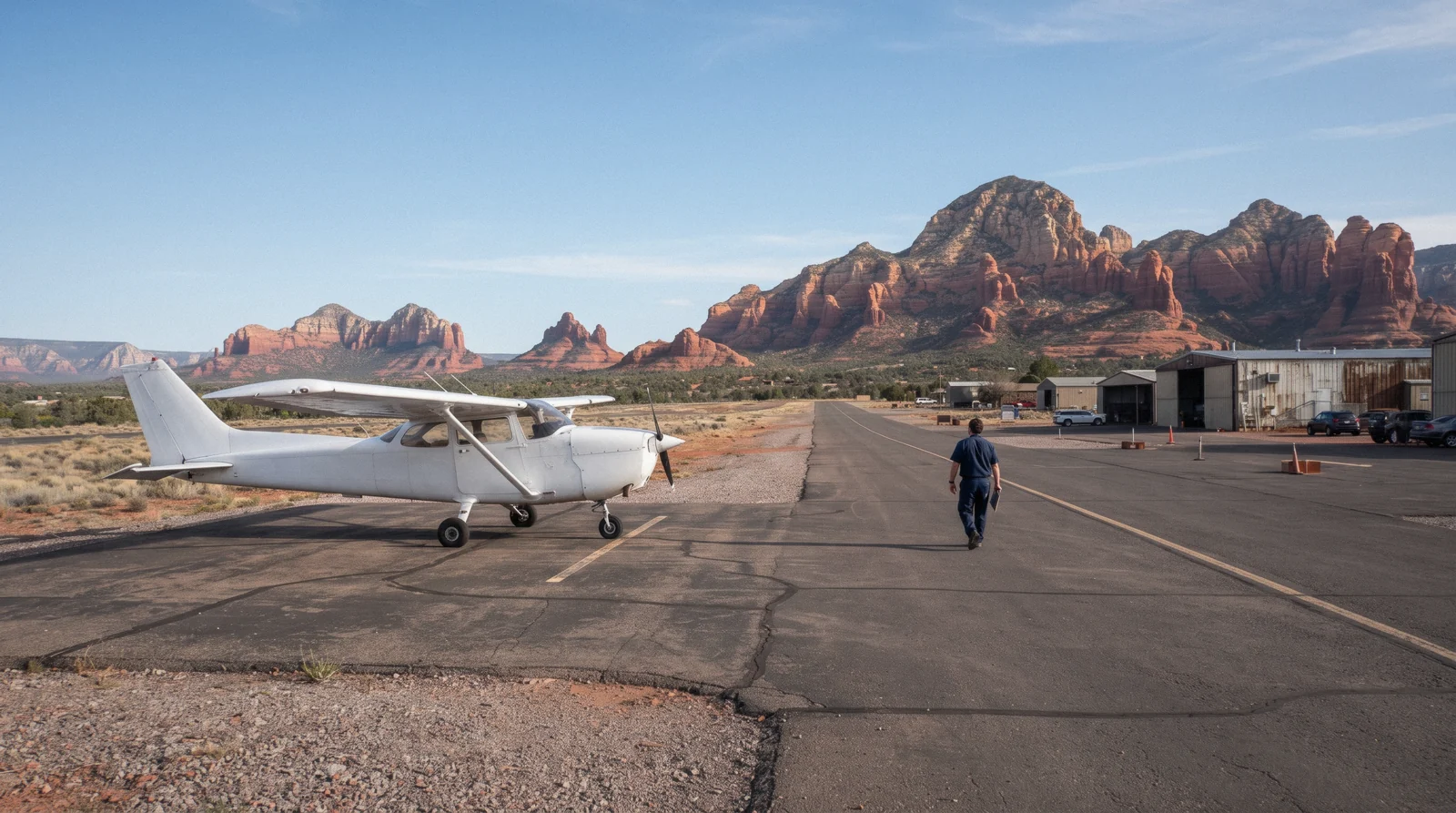
Sedona Helicopter Tours, Airplane Flights and Hot-Air Balloon Rides
Three aircraft actually fly paying passengers over Sedona: a helicopter, a fixed-wing airplane, and a hot-air balloon, and the choice between them decides more than the view. Sedona helicopter tours climb fast over Cathedral Rock, Bell Rock and Boynton Canyon in 20 to 30 minutes; the airplane option flies wider loops over the Verde Valley for the same price as dinner; a balloon drifts at dawn wherever the wind sends it. All three fly under the same federal wilderness-overflight guidance, and none of it is skip-the-line tourism. It is weather-dependent, altitude-limited flying that the operator can cancel on short notice, one piece of the rest of the Sedona trip guide alongside the trails and the passes below it.
Quick answer What each aircraft shows you, what it costs, and the one federal rule that caps every flight over the wilderness
A Sedona helicopter tour is the fastest way to see Cathedral Rock, Bell Rock and Boynton Canyon from above, running $109.40 to $570 depending on route and craft, and every operator flying near the Red Rock Secret Mountain and Munds Mountain Wilderness areas works under the same voluntary FAA ceiling of 2,000 feet above the terrain.
Key takeaways
- The Secret Wilderness Sunset helicopter tour is the longest of the three at 45 miles and 30 minutes airborne; the helicopter-and-Jeep combo trades flight time for a ground leg through the same canyons.
- The cheapest way into the air is the Verde Valley and Sycamore Canyon airplane tour at $109.40 for 50 minutes, flown from Cottonwood rather than Sedona itself.
- No hot-air balloon operator is part of this site's checked tour inventory; the balloon section below explains what to expect and what to ask before booking one directly.
- Heat, not crowding, is the reason a summer afternoon slot gets moved: see weather and cancellations before you pick a time.
The three aircraft, compared
Three flights list on this site's checked GetYourGuide inventory in Q3 2026; minutes airborne, price and route come from each operator's own listing page, and none of the three has a public rating yet. A fourth row for hot-air ballooning is included for context. It is not a bookable card on this site.
| Aircraft | Minutes airborne | What you see | Price | Rating | Book |
|---|---|---|---|---|---|
| Secret Wilderness Sunset helicopter | 30 | A 45-mile route over Red Rock Secret Mountain Wilderness scenery at sunset | $570 | No reviews published yet | Check Availability |
| Helicopter + off-road Jeep combo | 20 in the air | Cathedral Rock, Bell Rock and Boynton Canyon from above, then a guided Jeep leg on the ground | $306.48 | No reviews published yet | Check Availability |
| Verde Valley & Sycamore Canyon airplane | 50 | Verde Valley, Sycamore Canyon, Loy Butte, Red Canyon and Bear Mountain from a fixed-wing plane out of Cottonwood | $109.40 | No reviews published yet | Check Availability |
| Hot-air balloon flight | Typically 60-90 for the craft; no Sedona operator's own duration is part of this page's sourcing | A slow sunrise drift wherever the wind takes the basket, usually over the Verde Valley floor | Not part of this site's checked tour inventory | Not applicable |
"Minutes airborne" is the flight time an operator states for that specific product, not gate-to-gate time; add 20-30 minutes for check-in and the safety briefing on any of the three.
Book a Sedona scenic flight
All three cards link to the operator's own calendar, where the live date picker shows what is actually open. Prices in USD as listed in Q3 2026.
 from $570
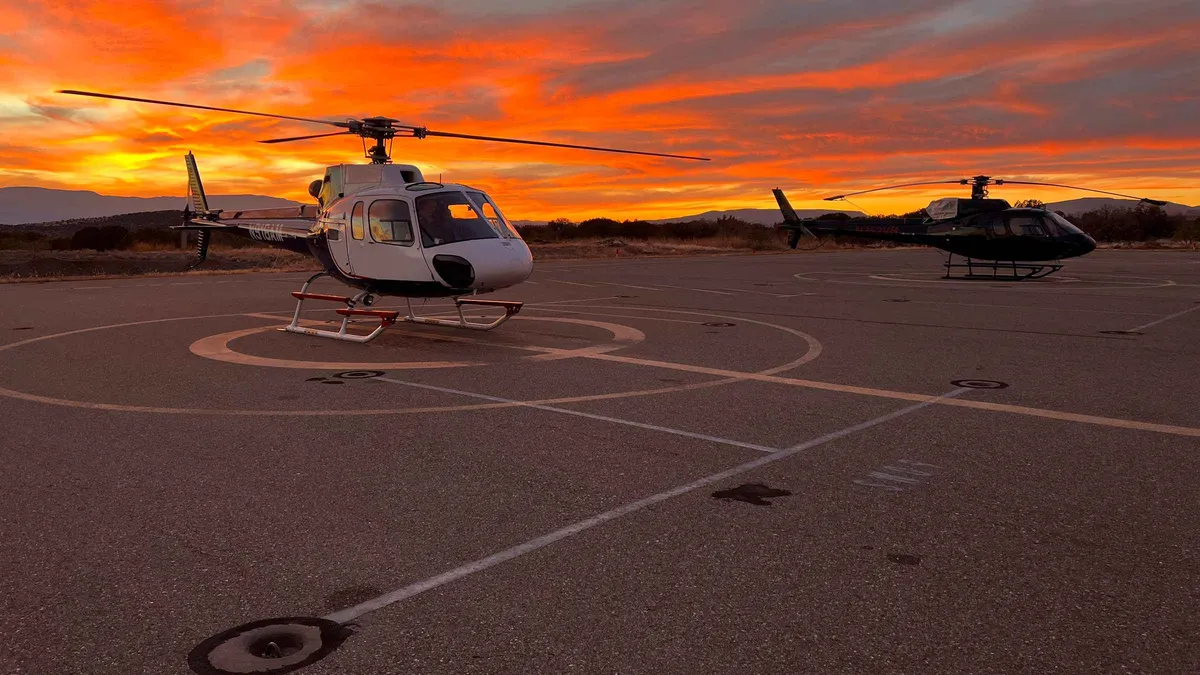
Secret Wilderness Sunset - 45 Mile Helicopter Tour in Sedona
A 30-minute sunset helicopter run over the Munds Mountain and Secret Wilderness areas and Gunsight Pass, covering more than 45 miles of terrain most visitors never reach on foot. Suits travelers who want the aerial perspective specifically at sunset rather than midday. A new listing on GetYourGuide with no reviews yet.
Check Availability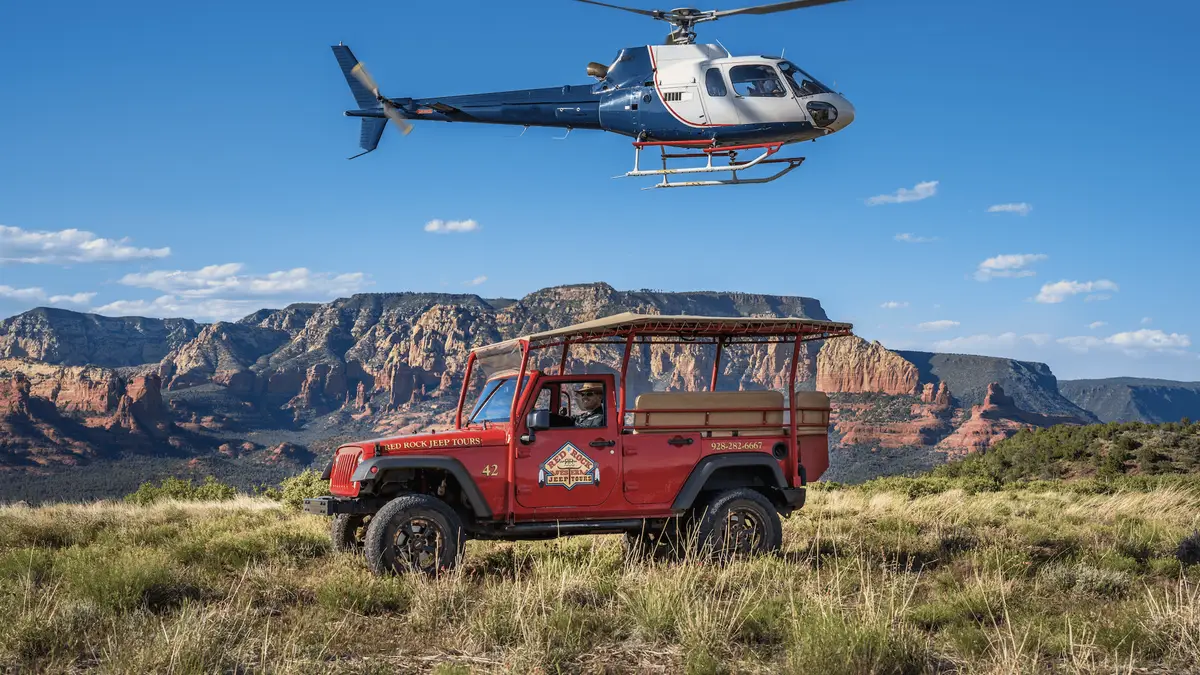 from $306.48
Sedona: Helicopter & Off-Road Jeep Adventure
A combo booking that pairs a short helicopter pass over Cathedral Rock, Bell Rock and Boynton Canyon with a 2-hour Jeep tour of the high-desert trails below, using one pickup point for both legs. Suits travelers who want the aerial view and the ground-level trail experience without booking two separate tours. A new listing on GetYourGuide with no reviews yet.
Check Availability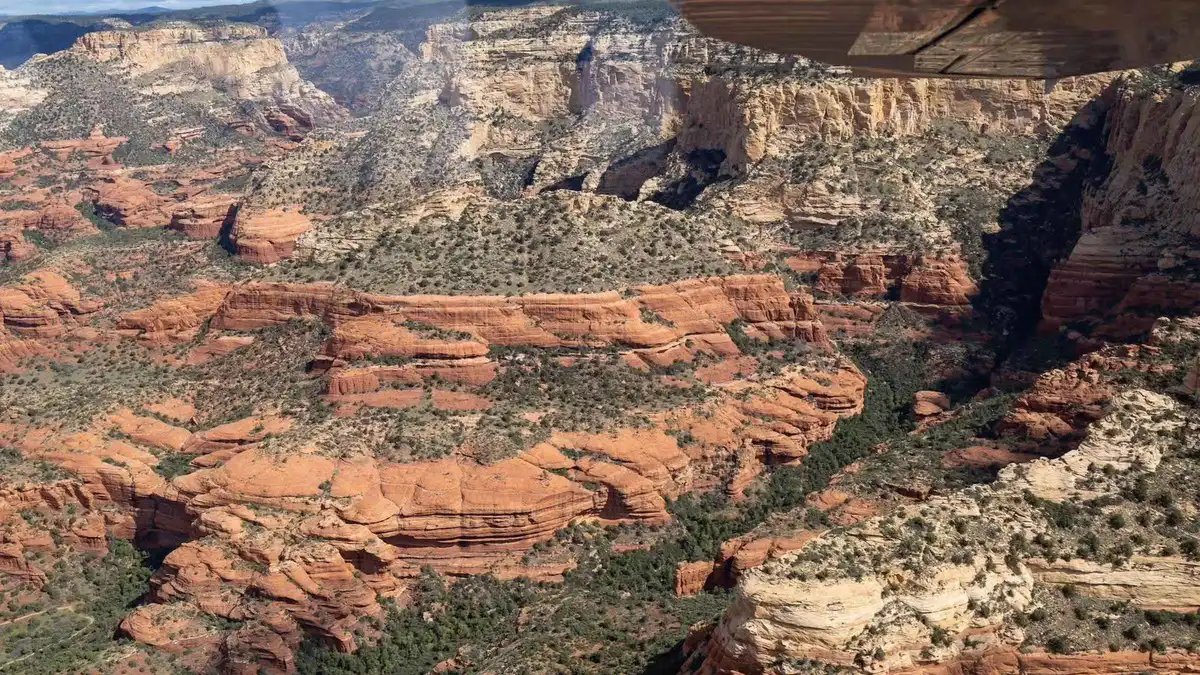 from $109.40
Sedona: Verde Valley & Sycamore Canyon Airplane Tour
A 50-minute fixed-wing flight from Cottonwood Airport over the Verde Valley, Jerome, and Sycamore Canyon (sometimes called the miniature Grand Canyon), with Boynton Canyon visible on the return leg. Suits travelers based near Cottonwood who want more range than a Sedona-based helicopter loop. A new listing on GetYourGuide with no reviews yet.
Check AvailabilityPrices, ratings and details are the platform's own, checked in Q3 2026; dollar figures are the listed prices — the platform bills in your account's currency.
What a helicopter, an airplane and a balloon actually show you
A helicopter climbs almost straight up and can slow down or hold a bank over one formation, which is why the two helicopter products here name specific landmarks: the Secret Wilderness Sunset tour covers 45 miles of terrain most visitors never drive past, and the helicopter-and-Jeep combo names Cathedral Rock, Bell Rock and Boynton Canyon directly, the same three formations most visitors already recognize from the ground at Cathedral Rock and Boynton Canyon. A helicopter cabin is small and loud even with headsets, and the view is mostly straight down and to the sides through the door window rather than forward.
A fixed-wing airplane flies faster, further and higher, and the Verde Valley & Sycamore Canyon tour covers ground a helicopter never would in 50 minutes: Loy Butte, Red Canyon and Bear Mountain, none of which sit inside Sedona's own red-rock core. The trade is proximity: an airplane holds a wider, flatter turn than a helicopter and does not hover, so the red rocks pass under the wing rather than filling it. This flight also departs from Cottonwood, about the same 30 minutes the Verde Lynx bus takes to reach central Sedona, since no official source states a driving-specific time for the route.
A hot-air balloon is the slowest and quietest of the three by a wide margin: it drifts with the wind rather than steering a route, so no two flights cover the same ground and no operator can promise which formations a given morning's flight will pass. That unpredictability is also the reason balloon flights fly only at first light, covered below under balloon launch windows.
The FAA and Forest Service rules over the wilderness
Sourced directly from the FAA's own advisory circular and the Coconino National Forest's safety page, in Q3 2026.
Federal Aviation Administration Advisory Circular 91-36D, in force since 2004, asks pilots of "noise producing aircraft (fixed-wing, rotary-wing and hot air balloons)" to fly no lower than 2,000 feet above ground level over noise-sensitive land, and it names wilderness areas by category. The red rocks around Sedona sit inside or beside two such areas managed by Coconino National Forest, Red Rock Secret Mountain Wilderness and Munds Mountain Wilderness, and the circular measures that 2,000 feet from "the highest terrain within 2,000 feet AGL laterally of the route of flight, or the uppermost rim of a canyon or valley", meaning the altitude floor rises with the terrain a flight passes over, not with sea level.
This is a voluntary standard, not a regulation: the circular itself says the 2,000-foot figure does not apply where it would conflict with Federal Aviation Regulations, air traffic control instructions, or where a pilot judges a lower altitude necessary to fly safely. It exists to cut noise complaints and disturbance to wildlife, not to license or ban any specific tour. That is a different regime from Coconino National Forest's own drone rule, which is mandatory: a drone may not launch, land or operate at all from inside a designated wilderness area, a restriction that applies to unmanned aircraft only and not to the manned helicopters, airplanes and balloons that carry paying passengers.
One flight product does routinely fly under stricter rules than the voluntary 2,000-foot guidance: any Sedona operator advertising a Grand Canyon add-on flies into the Grand Canyon National Park Special Flight Rules Area, governed by the mandatory National Parks Air Tour Management Act of 2000 and Public Law 100-91, with defined corridors and altitude floors set by the FAA and National Park Service rather than a voluntary request. None of the three tours on this page fly into that airspace; see the Grand Canyon guide for what changes on a flight that does.
Where these flights actually depart from
The two helicopter products fly out of Sedona's own municipal airport, on the mesa most visitors already know as a sunset viewpoint at Airport Mesa rather than as a working airfield. That location is what makes a Sedona helicopter tour a short, self-contained outing: check-in, the safety briefing and the flight itself all happen within a few minutes' drive of Uptown, with no separate trip to a distant airport required.
The airplane tour is the exception. It departs from Cottonwood Municipal Airport, not from Sedona at all, which is worth planning around: a visitor staying in Uptown or the Village of Oak Creek needs to budget the drive out to Cottonwood and back on top of the 50 minutes airborne, and the listing itself is the only source for exact check-in timing and directions.
Weather, heat and cancellations
Sedona sits at roughly 4,500 feet, and a summer afternoon regularly pushes the density altitude, the "effective" altitude an aircraft's engine and rotor actually feel, well above that figure once heat is added in. High density altitude is a standard, well-documented reason light aircraft and helicopters lose lift and engine performance, and it is why sightseeing flights everywhere in the high desert Southwest favor early morning and late-afternoon departures over the hottest hours of a July or August day. None of the three operators on this page publishes its own numeric wind or temperature cancellation threshold, so the honest answer is that the trigger is the pilot's judgment call on the day, not a published rule.
The Sedona monsoon window runs mid-June through the end of September, and afternoon storm cells are the other routine cause of a scrubbed or rescheduled flight in that stretch. Visibility and wind shear near a building thunderstorm are a hard no for any of the three aircraft. A morning slot, before the day heats up and before storm cells build, is the safer bet against both heat and monsoon cancellation for a booking made between June and September.
Booking a hot-air balloon flight separately
No hot-air balloon company appears in this site's checked GetYourGuide inventory, so there is no card to book here and no operator-specific price, weight limit or launch site to print. That is a gap in this page's own tour list, not a claim that Sedona balloon flights do not exist; several private operators fly them regularly, and the practical facts below hold regardless of which one a reader books directly.
Every hot-air balloon depends on calm, predictable air, which only exists reliably in the first hour or two after sunrise before the desert heats unevenly and starts generating thermals and gusty surface wind. That is why every balloon flight in this region launches near dawn and not at any other time of day, and why a launch can be scrubbed the night before or the morning of with very little notice if the forecast wind is wrong. A balloon has no steering; the pilot controls only altitude, using different wind layers to choose a rough direction, so no operator can promise a specific formation will be in view on a given flight the way a helicopter or airplane route can.
Who should think twice before booking
None of the three listings on this page publishes a weight limit, a minimum age or a medical exclusion, which is itself worth knowing before booking: a reader with a specific concern has to call or message the operator directly rather than check a published number on the tour page. That is common for small-aircraft sightseeing generally. Weight affects a helicopter's performance more than a car's, so an operator that does not ask is the exception, not the rule, and a heavier-than-average traveler should expect to be asked at check-in even without a printed policy.
A helicopter cabin is tight, loud even with headsets on, and involves a step up into a low seat; anyone with limited mobility, a bad back, or acute claustrophobia is better served by the airplane option, which has a conventional cabin and door. Motion sickness is a real risk on all three: a helicopter's banking turns, a small plane's turbulence at altitude, and a balloon's basket ride each affect different people differently, and none of the three tours states a refund policy for a passenger who cannot fly once airborne. Anyone pregnant, or managing a heart or inner-ear condition, should get specific medical clearance before booking any of the three, since none of the operators screens for this on the booking page itself.
Fitting a flight into the rest of the trip
A helicopter flight is short enough to slot into almost any day: 20 to 30 minutes airborne plus check-in fits before a morning hike or after a late lunch without reshaping the rest of a 1-day or 2-day itinerary. The airplane tour needs more planning around it, since the drive to and from Cottonwood adds real time on either side of the 50 minutes in the air.
Anyone weighing a flight against a ground tour of the same landmarks should read it as a substitution, not an add-on: the helicopter-and-Jeep combo already pairs the two, and a reader who wants Cathedral Rock and Boynton Canyon from the ground alone is better served by the standalone jeep tours hub, which runs longer and costs less per hour than any of the three flights here.
Round out the sky and the ground
Where the view from above connects to the ground-level version of the same trip.
Grand Canyon day trip
The one flight product not covered here: any tour that crosses into the Grand Canyon's own Special Flight Rules Area flies under mandatory rules, not the voluntary wilderness guidance above.
Jeep tours
The helicopter-and-Jeep combo pairs the air with a ground route through the same backcountry; the Jeep tours hub covers the ground-only options.
Sedona tours hub
Every guided way to see Sedona, sky and ground together, sorted by what the tour actually does.
Verde Canyon Railroad
A slower, ground-based way to see the Verde Valley the airplane tour flies over, from a train rather than a cockpit.
Sedona helicopter and scenic flight questions
How much do Sedona helicopter tours cost?
The two helicopter products checked for this page run $306.48 for a 20-minute flight paired with a Jeep leg up to $570 for the 30-minute Secret Wilderness Sunset tour. A fixed-wing airplane tour is the cheapest way into the air at $109.40 for 50 minutes, though it departs from Cottonwood rather than Sedona itself.
Are Sedona helicopter tours worth the money?
That depends on what the flight is being compared to: at $306.48 to $570 for 20 to 30 minutes, a helicopter tour costs several times more per minute than ground-based Jeep tours of the same canyons, and it buys a viewpoint no trail or road reaches: straight down onto Cathedral Rock and Boynton Canyon rather than up at them. Neither of the two helicopter products here has a public rating yet, so this page cannot cite reviewer satisfaction, only what the route covers and what it costs.
Is there a weight or age limit for a Sedona helicopter or airplane tour?
None of the three tours checked for this page publishes a weight limit, a minimum age, or a medical exclusion on its own listing. That is a genuine gap in what is published, not a confirmation that no limit exists; anyone with a specific concern should contact the operator directly before booking rather than assume.
How high do helicopters fly over Sedona's wilderness areas?
FAA Advisory Circular 91-36D asks pilots of helicopters, airplanes and hot-air balloons to stay at least 2,000 feet above the terrain over wilderness areas, including Red Rock Secret Mountain and Munds Mountain Wilderness. It is a voluntary noise-reduction guideline, not a hard regulatory ceiling, and the FAA measures the 2,000 feet from the highest terrain nearby or the rim of a canyon, whichever is higher. See the wilderness rules above for the full explanation.
Do Sedona hot-air balloon flights go over the red rock formations?
A balloon has no steering and drifts with whatever wind layer the pilot chooses by changing altitude, so no operator can guarantee which formations a specific sunrise flight will pass. Most balloon flights in this region launch from the Verde Valley floor and drift over open desert and ranch land rather than directly over the narrower canyons a helicopter can enter; see booking a balloon flight above for what to ask before reserving one directly.
What causes a Sedona scenic flight to be canceled?
Heat and monsoon storms cancel more Sedona flights than crowding ever does. High density altitude on a hot summer afternoon reduces helicopter and airplane performance, and the monsoon window from mid-June to the end of September brings afternoon storm cells with wind and visibility problems no aircraft flies through safely. None of the three operators checked for this page publishes a specific wind or temperature threshold; the call is made by the pilot on the day.
Sedona Scenic Flights on Film
Three flights, filmed from the cabin, that show what the view from a helicopter over the red rocks actually looks like.
Sedona Arizona Deluxe Helicopter Tour
A full deluxe-route flight showing the red rock terrain from a helicopter cabin, door to door.
Video: JrdnathleteAncient Sites Helicopter Tour in Sedona, Arizona
A route built around the region's archaeological sites, filmed from the air over the canyons.
Video: ViatorSedona, Arizona Helicopter Tour
A shorter sightseeing flight over the formations closest to town, filmed in daylight.
Video: Magellan and GreyhoundVideos load from YouTube only when you press play.
Reviewed Q3 2026 (July–September 2026); next review Q4 2026. Prices, hours and terms are set by the venue or operator and confirmed at checkout.
We may earn a commission if you book through one of our links, at no extra cost to you. Full affiliate disclosure