 Sedona City Guide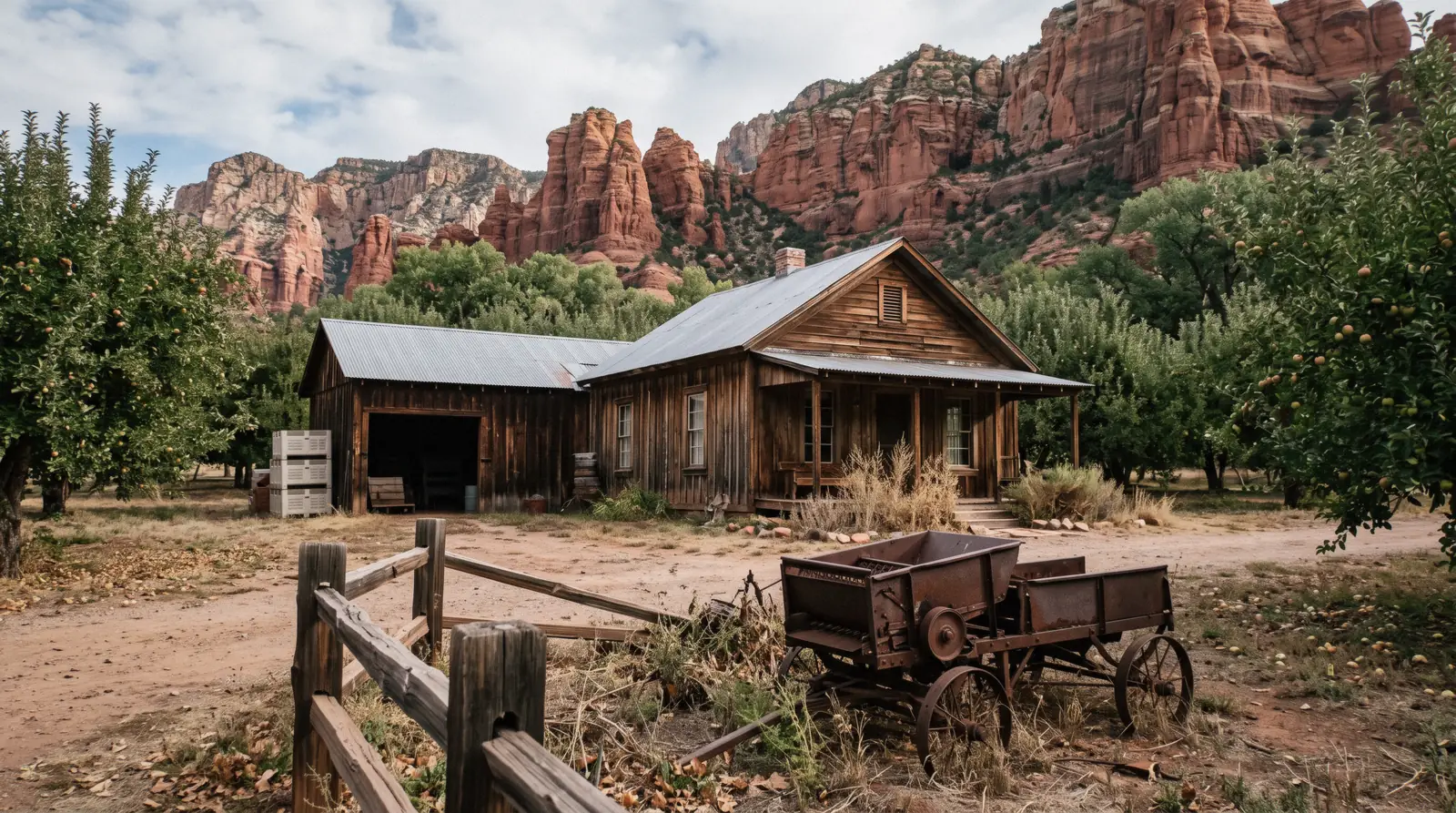
Sedona Heritage Museum
The Sedona Heritage Museum occupies the actual homestead of the Jordan family, whose apple and peach orchards once covered the ground Uptown Sedona now stands on. Three original buildings, the family's red-rock home, a tractor shed and a 1946 fruit-packing shed, sit on the 4.8-acre Jordan Historical Park on Jordan Road, all three listed on the National Register of Historic Places. This page covers the hours, the admission price, what the buildings actually hold and how long to give it; the rest of Uptown is on the things to do in Sedona list, and the Chapel of the Holy Cross is a short drive away on the other side of town. The fuller case for giving Sedona more than a single afternoon sits on the homepage.
Quick answer Hours, price, what's inside, how long, in three lines
The Sedona Heritage Museum is open daily 11:00 am to 3:00 pm, $10 for adults and free for children under 13, in the Jordan family's original homestead buildings on Jordan Road in Uptown.
Key takeaways
- It is a small, cheap, air-conditioned hour, not a big-city museum: three original buildings on a 4.8-acre park, Jordan Historical Park, that once was a working apple orchard
- A Sedona highlights van tour narrates the town's history if you want it folded into a wider morning; the museum's own $10 entry is separate and paid at the door
- The telegraph office on the grounds is the last surviving building from a 1947 John Wayne film set, covered in what to see inside
- It sits five minutes from the Chapel of the Holy Cross and Tlaquepaque by car, both on the things to do list
Key facts
Opening hours
| Daily, all year | 11:00–15:00 |
|---|
Closed Major holidays (the museum's own site does not list the specific dates)
Admission
- Adult
- $10
- Reduced
- Not stated (no published senior or military rate)
- Free
- Children under 13
Planning it
- Time needed
- Not stated by the museum; our routing: about an hour for the three landmark buildings and the grounds
- Book ahead
- Optional — walk-up usually fine
- Address
- 735 Jordan Rd, Sedona, AZ 86336
There is no online ticket for the Sedona Heritage Museum; the $10 adult admission is paid at the door, priced from the museum's own site on 9 September 2026. The only other option on the market is a guided town tour that narrates Sedona's history without including this museum's entry.
Are you here to see the homestead itself, or do you want Sedona's history narrated as part of a wider morning?
| Option | Price | Includes | Cancel | Book |
|---|---|---|---|---|
| General admission, paid at the doorEveryone. There is no advance ticket, member rate, or online skip-the-line product to compare it against | $10 adult; free under 13 | Self-guided access to all three landmark buildings and the grounds | No online sale to refund | Official site |
| Sedona highlights van tour, 6 stopsVisitors who want a guide's narration across a wider morning of sightseeing; this ticket does not include museum admission, which you still pay separately at the door | $126 | 5.5-hour open-air van tour with a local guide narrating Sedona history | Set by the operator at booking | Check Availability |
| Magic of Sedona sightseeing tour, 2 hA shorter narrated overview if two hours is all the sightseeing time you have; again, not a museum ticket | $63 | Open-air bus tour covering red rock geology and regional history with photo stops | Set by the operator at booking | Check Availability |
The museum publishes one admission price and sells it only at the door; there is no reseller, no combo ticket and no skip-the-line product because there is no line to skip. The two van tours above are general Sedona sightseeing, not substitutes for walking through the homestead.
Sedona sightseeing tours that pass through Uptown
None of these include Sedona Heritage Museum admission, which is paid at the door; they cover the wider town on the way. Prices as listed in Q3 2026.
 from $126
Most-reviewed sightseeing tour on this page (212 reviews)
from $126
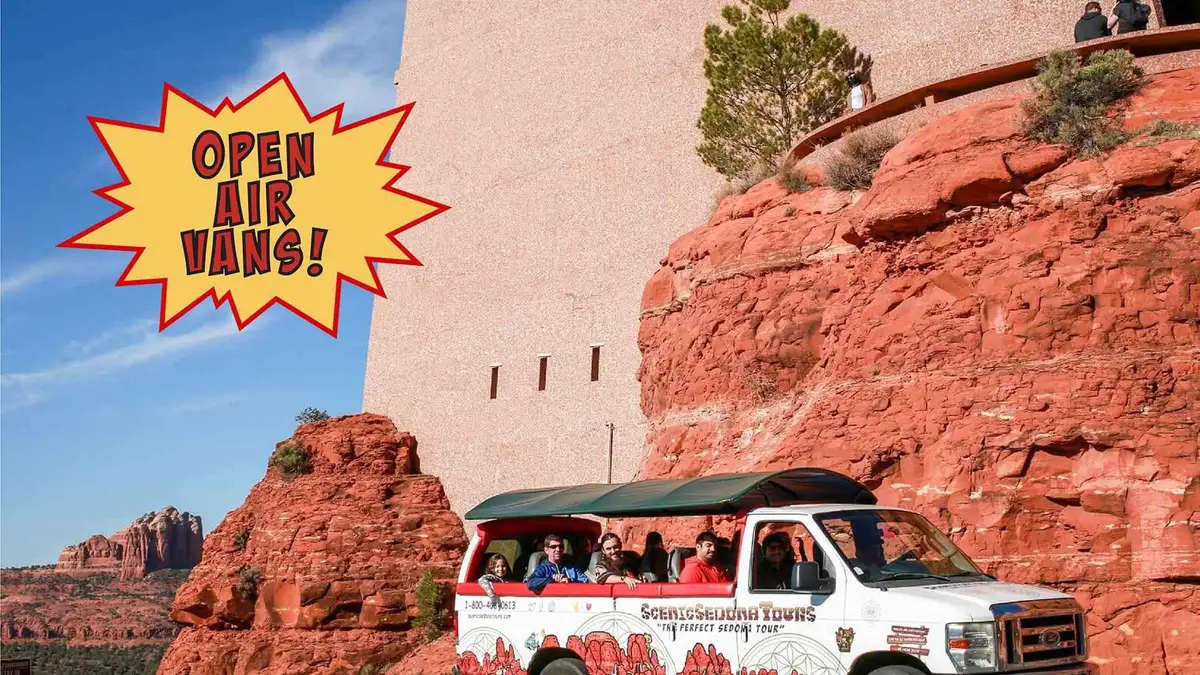
Most-reviewed sightseeing tour on this page (212 reviews) Sedona: Open-Air Van Tour with a Local Guide and 6 Stops
A longer open-air van circuit with six stops mixing sightseeing, shopping and food rather than a single scenic loop. Suits visitors who want to break up the drive with time on foot at each stop.
Check Availability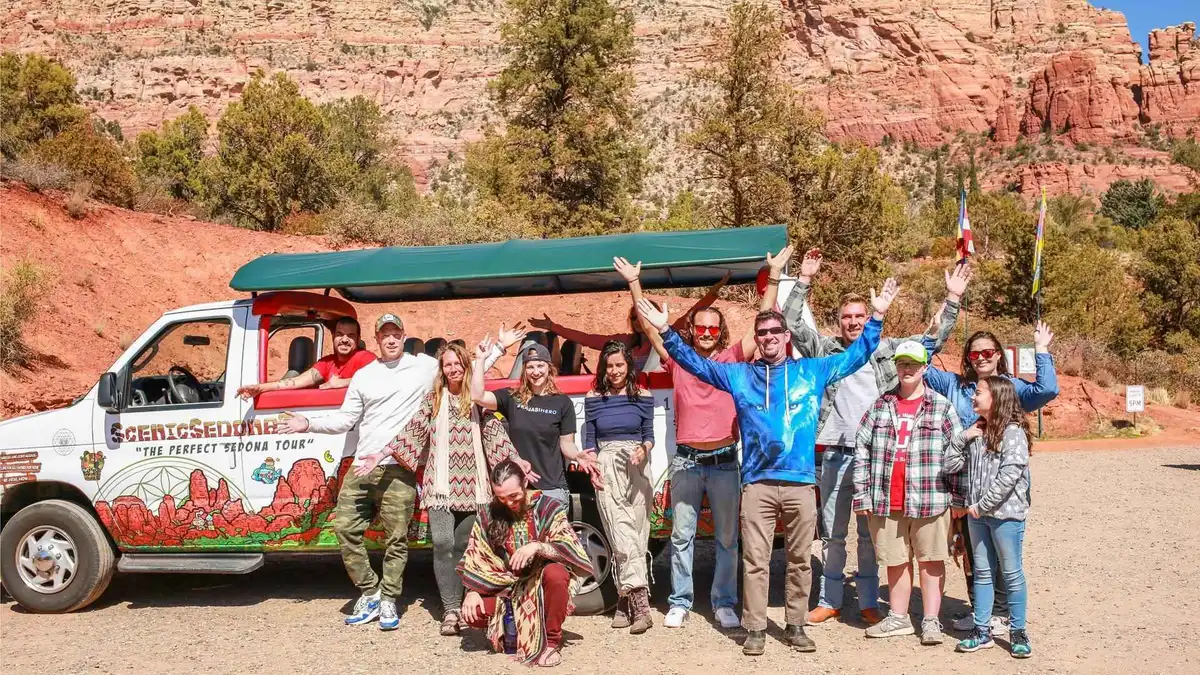 from $63
Sedona: The Magic of Sedona Highlights Tour
An open-air bus sightseeing loop with a local guide covering Sedona's geology, vortex claims, and history across several photo stops. Suits visitors who want an overview of the whole town on one short ride.
Check Availability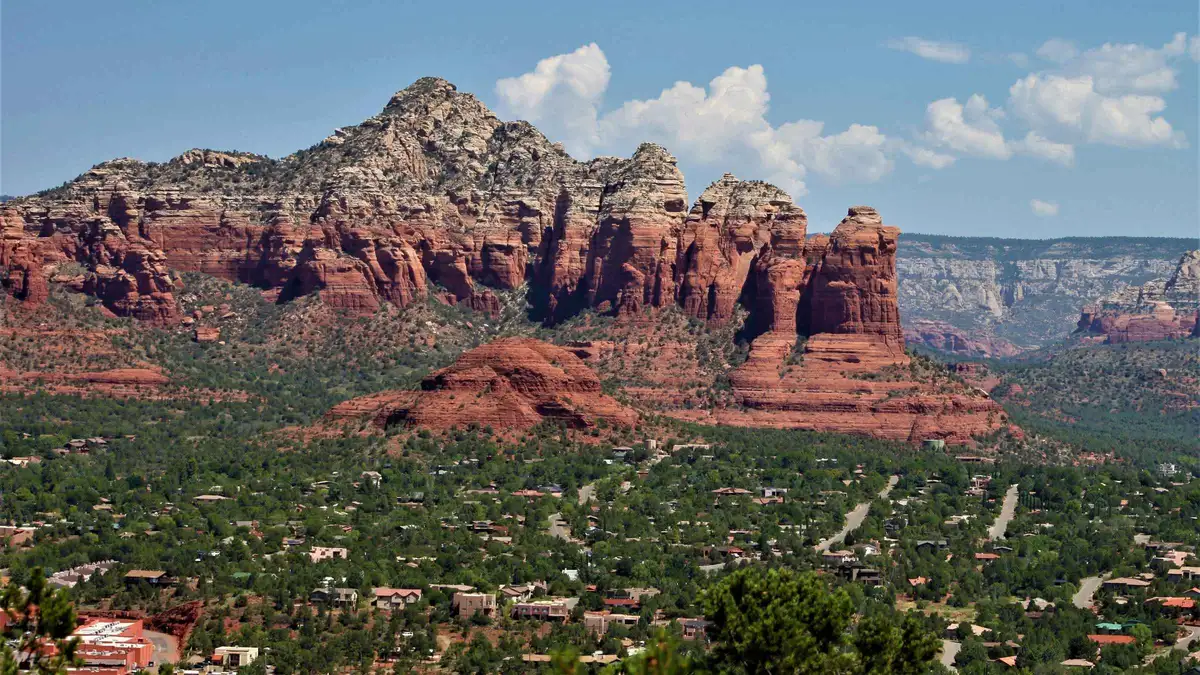 from $49.95
Sedona: Hi-Points Van Tour
A short, low-cost run to Sedona's most-visited viewpoints, positioned by the operator as a quick highlights reel rather than a full-day itinerary. Suits travelers with limited time who want the classic photo stops fast.
Check AvailabilityPrices, ratings and details are the platform's own, checked in Q3 2026; dollar figures are the listed prices — the platform bills in your account's currency.
What the Museum Is: the Jordan Family's Working Orchard
The museum is not a building put up to hold exhibits. It is the actual house, tractor shed and fruit-packing shed the Jordan family used to run an apple and peach orchard on this ground, on the property they later gave to the city rather than sell to a developer.
A one-room cabin, 1931
Walter and Ruth Jordan built a one-room cabin with a porch and carport on the property in 1931 and raised a family in it as the orchard grew around them. Ruth's mother, Fannie Woolf, helped fund a 1937 expansion, two bedrooms and an indoor bathroom, so she could spend Tempe's summer heat in Sedona instead.
The 1947 addition and the packing shed
After World War II, with materials and labor available again and the orchard doing well, the Jordans added a full kitchen, electric appliances, hardwood floors and a radiator system in 1947. The finished house, faced in red rock quarried locally, reached almost 3,000 square feet. A new 40-by-80-foot fruit-packing shed went up in 1946 to keep pace with the business; the older tractor shed, once used for packing, went back to storing farm equipment and still holds Mr. Jordan's tractors.
The orchard itself was the family's livelihood, not a hobby beside the house: everything from the packing shed's scale to the 1947 kitchen upgrade traces back to fruit sales, which is the thread the museum's "orchard industry" exhibit theme follows.
Selling to the city instead of a developer
Ruth Jordan wanted the property preserved rather than turned into housing. In 1991 the City of Sedona bought it using a bequest from the Stella Carruth estate, and in cooperation with the Sedona Historical Society converted the aging residential property into a public park and museum, which opened in 1998 [sedonamuseum.org, Museum Grounds]. The park and buildings are city-owned and leased to the Historical Society, which runs the museum today.
The Three Landmark Buildings, and Why the Packing Shed Matters
All three original buildings, the red-rock home, the tractor shed and the 1946 fruit-packing shed, are listed on the National Register of Historic Places and were the first three properties designated Local Landmarks by the City of Sedona.
The packing shed is the building that explains the orchard business rather than just the family. Its walls are poured concrete faced in red rock; inside, the original apple grading machine still stands, the machine that let the Jordans sort fruit fast enough to truck four to seven tons of it to Phoenix markets several times a week, on top of the local trade that grew as tourists started arriving. Without a machine like it, an orchard this size could not have kept pace with a Phoenix delivery schedule using 1940s hand-sorting alone.
The home and the tractor shed carry the domestic side: original Jordan furnishings and personal belongings sit inside both, and Jordan family descendants still volunteer at the museum, the same continuity that got the property preserved in the first place rather than redeveloped.
The distinction matters for how you should walk the grounds: the packing shed rewards someone who reads the interpretive signs next to the grading machine, while the home rewards someone who wants a sense of what a working family's rooms looked like across three separate building phases, 1931, 1937 and 1947, under one roofline.
Visiting: Groups, Research and Access
Three details the museum publishes that change how a specific kind of visitor should plan the stop.
Groups get their own rate structure, self-guided or with a docent leading the walk-through; the museum asks that a group call 928-282-7038 ahead to arrange it rather than showing up and expecting a guide on the spot.
The research library is open to the public, but by appointment only, for genealogy work or personal and professional research into Sedona's history. It is not a browsing room you can wander into during the regular 11 am to 3 pm window without having called first.
The park added ADA-compliant restrooms and paved paths when the city converted the property in the 1990s, alongside the memorial orchard, bronze sculptures and picnic tables, which is why the grounds now serve picnickers and neighborhood walkers as well as museum visitors, not only people who paid the $10 admission.
None of this changes the core arithmetic of the visit: a solo traveler or a couple can walk in during the 11 am to 3 pm window, pay the $10 fee at the door and be done within an hour without calling ahead for anything. The appointment and phone-call requirements above only bind you if you are bringing a group or doing genealogical research, not for an ordinary visit.
What to See Inside: Orchards, Cowboys, and Sedona on Film
The museum's own site lists five regular themes across the buildings and grounds: early settlers, ranching and cowboys, the orchard industry, movies made in Sedona, and Sedona Schnebly, the town's namesake [sedonamuseum.org].
The telegraph office: a surviving 1947 movie set piece
The one building on the grounds that was not part of the Jordan homestead is the telegraph office, relocated here in 2014. It is the last remaining structure from a movie set built in Sedona for John Wayne's 1947 film Angel and the Badman [sedonamuseum.org, Museum Buildings], a direct, physical piece of the era when Sedona's red rock scenery drew Hollywood westerns to town, which the museum's film-history exhibit covers alongside it.
The tenthouse: an early pioneer's mobile home
Added in 2007, the tenthouse is a museum-built replica of the collapsible, transportable canvas-and-wood housing early Sedona settlers used before permanent construction went up, built by museum volunteers with help from Sedona Charter School students. The museum calls it, not entirely as a joke, the original mobile home.
The memorial orchard and grounds
The 4.8-acre park around the buildings, Jordan Historical Park, carries a memorial orchard planted in tribute to the working orchards that once covered this stretch of Uptown, plus bronze sculptures, walking paths and ADA-compliant restrooms added when the city converted the property. It draws picnickers and neighborhood walkers as well as museum visitors, and it doubles as a wedding venue with the red rocks as a backdrop.
The current rotating exhibit
The museum runs a changing exhibit alongside its permanent themes; as of in Q3 2026 it is The Road Is Life: Sedona and Route 66. Check the museum's own events calendar before a visit if a specific exhibit is the reason you are coming, since rotating shows change on a schedule the museum sets, not one this page can predict.
The Agents of Discovery app, for families
The museum recommends downloading the free Agents of Discovery app before a visit; it turns the grounds into a set of short history-themed challenges tied to specific spots around the buildings and orchard, aimed at children who would otherwise walk through three historic rooms in ten distracted minutes. It costs nothing beyond the $10 family admission and works on a phone already in your pocket.
The Jordan Homestead In Eight Dates
Every date below is already argued somewhere on this page; the list is here so the property's history reads in order.
-
1931
Walter and Ruth Jordan build a one-room cabin
Porch and carport included, on the orchard land that is now Jordan Historical Park.
-
1937
Two bedrooms and an indoor bathroom added
Funded partly by Ruth's mother, Fannie Woolf, who wanted to spend summers away from Tempe's heat.
-
1946
The 40-by-80-foot fruit-packing shed is built
To keep pace with an orchard shipping 4 to 7 tons of fruit to Phoenix several times a week.
-
1947
The house gets a full kitchen and the John Wayne film set goes up
The same year the Jordans finished their post-war kitchen addition, Angel and the Badman was filmed in Sedona; its telegraph office survives today on this site.
-
1991
The City of Sedona buys the property
Using a bequest from the Stella Carruth estate, rather than see it sold for housing development.
-
1998
The Sedona Heritage Museum opens
Fulfilling Ruth Jordan's wish to see the homestead preserved as a public place, run by the Sedona Historical Society under lease from the city.
-
2007
The tenthouse replica is built
By museum volunteers and Sedona Charter School students, as an exhibit on early pioneer housing.
-
2014
The telegraph office is relocated to the grounds
The last surviving structure from the 1947 Angel and the Badman movie set.
Dates as published on sedonamuseum.org's Museum Grounds and Museum Buildings pages, read for this guide in Q3 2026.
How Much Time To Give The Sedona Heritage Museum
The museum states no official visit length. These three routings are ours, built from the three buildings and the grounds.
This is a small museum by design, not a compromise: three original buildings on a compact 4.8-acre park, not a campus.
| Routing | What you get | What it skips | Door to door |
|---|---|---|---|
| The quick visit | The red rock home and the packing shed with its grading machine | The tractor shed and the tenthouse replica | About 30 to 45 minutes |
| The full visit | All three landmark buildings, the telegraph office, the tenthouse and a walk through the memorial orchard | Nothing | About an hour, longer if a docent is on duty and talking |
| With a wider Sedona tour | The 6-stop highlights van tour covers the town around it, but the museum's $10 door fee is separate and not included in the tour price | The self-paced reading the exhibits reward | Add the museum's own hour before or after the tour's stop near Uptown |
How to Get There and Where to Park
The museum's own site publishes three separate routes depending on where you are starting from in town, plus the overflow lot's exact path.
From SR 89A in Uptown
Take the Jordan Road exit at the Uptown roundabout and go north on Jordan Road for three-quarters of a mile; the museum entrance is on the left.
From Oak Creek Canyon
Exit the roundabout onto Owenby Way and continue onto Schnebly Road, then turn right on Jordan Road and go four blocks; the entrance is on the left.
From West Sedona, via the Forest Road Cutoff
Turn onto Forest Road and follow it to SR 89A in Uptown, then turn left on 89A and take the Jordan Road exit at the roundabout, north three-quarters of a mile to the entrance on the left. The museum recommends this route specifically to avoid traffic at the Brewer Road and SR 179 roundabouts.
When the main lot is full
Use the Overflow Parking lot just beyond the main entrance: cross the bridge, turn left at the first driveway, then follow the walkway across a pedestrian bridge and up the hillside to the museum grounds.
At The Sedona Heritage Museum: What To Do, And What Not To
Every line here is a decision argued somewhere above, compressed into the form you can act on that morning.
Do
- Arrive within the 11 am to 3 pm window; there is no earlier or later entry and no online ticket to buy ahead
- Bring cash or a card for the $10 door fee since there is nothing to prepay
- Walk the memorial orchard and grounds, not just the three buildings, if the weather is good
- Check the museum's own events calendar first if a specific rotating exhibit is why you are coming
- Use the Overflow Parking lot across the pedestrian bridge if the small main lot is full
Don't
- Don't expect a big-city museum experience; it is three homestead buildings on 4.8 acres, and an hour covers it well
- Don't confuse this with the Chapel of the Holy Cross or Tlaquepaque; all three are in the Uptown and Chapel cluster but are different stops
- Don't plan a holiday visit without checking ahead; the museum states it closes on major holidays without publishing the specific dates
- Don't assume the research library is walk-in; it is open to the public by appointment only
- Don't skip the telegraph office thinking it's part of the original homestead; it is a 2014 addition from a 1947 film set
Five Things Most Visitors Do Not Know About The Sedona Heritage Museum
All five come off the museum's own published pages, and each one changes something about how you'd walk the grounds.
- The buildings are not replicas. The red rock home, the tractor shed and the 1946 packing shed are the Jordan family's actual working buildings, not a museum's recreation of them [sedonamuseum.org, Museum Buildings]. - The telegraph office is a genuine movie-set survivor, the last structure standing from the set built in Sedona for John Wayne's 1947 film Angel and the Badman, moved to the grounds in 2014 [sedonamuseum.org, Museum Buildings]. - The apple grading machine inside the packing shed still works as a display piece and is the object that explains how a Sedona orchard could ship 4 to 7 tons of fruit to Phoenix several times a week in the 1940s [sedonamuseum.org, Museum Grounds]. - Jordan family descendants still volunteer at the museum, carrying on Ruth Jordan's role after the buildings passed to the city in 1991 [sedonamuseum.org, Museum Grounds]. - The grounds double as a wedding venue on the National Register of Historic Places, priced separately from museum admission and booked through the museum office directly [sedonamuseum.org, weddings page].
Sedona Heritage Museum map: Jordan Road and the Uptown cluster
The museum entrance on Jordan Road, three-quarters of a mile north of the Uptown roundabout, and the two other free-or-cheap Uptown stops within a short drive.
Next stop from the Sedona Heritage Museum
Drive minutes are our estimates from the GPS distances; none of these are a walk from Jordan Road.
Tlaquepaque
Free to enter, 50-plus shops and galleries in Spanish-colonial-style courtyards. Tlaquepaque is open later than the museum, until 5 or 6 pm depending on the day.
About 5 min driveAmitabha Stupa & Peace Park
A free Buddhist stupa and peace park in West Sedona. The Amitabha Stupa keeps no fixed closing time beyond dusk, so it pairs with a later-afternoon museum visit.
About 8 min driveChapel of the Holy Cross
Built into the red rock south of town, free and open until 4:45 pm. The Chapel closes around the same time as the museum, so plan whichever one is further from your next stop first.
About 10 min driveSedona Heritage Museum questions
How much does it cost to visit the Sedona Heritage Museum?
Ten dollars for adults, paid at the door; children under 13 enter free. There is no published senior, student or military discount and no online ticket, so the door price is the only figure to plan around.
What are the Sedona Heritage Museum's hours?
Daily, 11:00 am to 3:00 pm, year-round, with closures on major holidays that the museum's own site does not date individually. There is no early or late entry outside that four-hour window.
What is Jordan Historical Park?
The 4.8-acre city park the museum sits inside, named for the Jordan family whose orchard homestead the buildings once were. The City of Sedona owns the park and leases the museum building operation to the Sedona Historical Society.
Is the Sedona Heritage Museum worth visiting?
For an hour in an air-conditioned break from the trails or the heat, yes: it is the one stop in town that explains how Sedona went from working orchards to a tourist destination, through the actual buildings a farming family used to run that business. It is not a large museum, and a visitor expecting a big-city collection should size expectations to a homestead, not a campus.
How long do you need at the Sedona Heritage Museum?
About an hour for all three landmark buildings, the telegraph office and a walk through the memorial orchard. Thirty to 45 minutes covers the home and the packing shed alone if time is tight.
What movies were filmed in Sedona, according to the museum?
The museum's own exhibit theme is simply "movies made in Sedona," and the one physical artifact tied to it on the grounds is the telegraph office, the last surviving structure from the set built for John Wayne's 1947 western Angel and the Badman, relocated here in 2014.
Is parking free at the Sedona Heritage Museum?
Yes. The main lot is at the entrance on Jordan Road; when it fills, an Overflow Parking lot sits just beyond the entrance, reached by crossing a bridge and a pedestrian walkway up the hillside to the grounds.
Can you visit the Sedona Heritage Museum as a group?
Yes. The museum offers group rates for both self-guided visits and docent-led tours, but asks groups to call 928-282-7038 ahead of time rather than arrive unannounced during the 11 am to 3 pm window.
Is the Sedona Heritage Museum wheelchair accessible?
The grounds carry ADA-compliant restrooms and paved paths added when the City of Sedona converted the property into a park in the 1990s. The museum's site does not publish a separate accessibility statement for the three historic buildings themselves, so call ahead if a specific building's doorway or floor level is a concern.
Does the Sedona Heritage Museum have a gift shop?
The museum's own site does not publish a separate gift shop page the way larger attractions do; what it does list clearly is the $10 door admission and the option to arrange group tours by phone. Treat any shopping as secondary to the three buildings and the orchard grounds, which is what the admission actually pays for.
Where the Museum Fits in a Sedona Day
Give it an hour, mid-morning or mid-afternoon, on a day you are already in Uptown for Tlaquepaque or the Chapel of the Holy Cross; all three sit within a short drive of each other and none of them charges more than the museum's $10 door fee. It is also the obvious answer on a hot afternoon between two trailheads, since it is indoors, air-conditioned, and does not need a Red Rock Pass the way the Forest Service trails around it do. The pass and its rules are covered on the Red Rock Pass page.
The rest of the things to do in Sedona list ranks every stop, free and paid, by time needed. A hot midday hour is the single best reason to route through here: the three buildings are air-conditioned, the $10 fee is the cheapest paid stop in this cluster, and neither the museum nor its parking lot requires the Red Rock Pass that the trailheads around town do.
The Sedona Heritage Museum on Film
Three walk-throughs of the Jordan homestead buildings and grounds, so the layout is familiar before you park on Jordan Road.
Sedona Heritage Museum
A walk through the buildings and grounds, filmed at the museum itself.
Video: Red Rock TVVisit Sedona Heritage Museum
An overview of the homestead buildings and what each one holds.
Video: Sedona HistorySedona Heritage Museum
A tour of the grounds and the Jordan family's original buildings.
Video: Red Rock TVVideos load from YouTube only when you press play.
Reviewed Q3 2026 (July–September 2026); next review Q4 2026. Prices, hours and terms are set by the venue or operator and confirmed at checkout.
We may earn a commission if you book through one of our links, at no extra cost to you. Full affiliate disclosure