 Sedona City Guide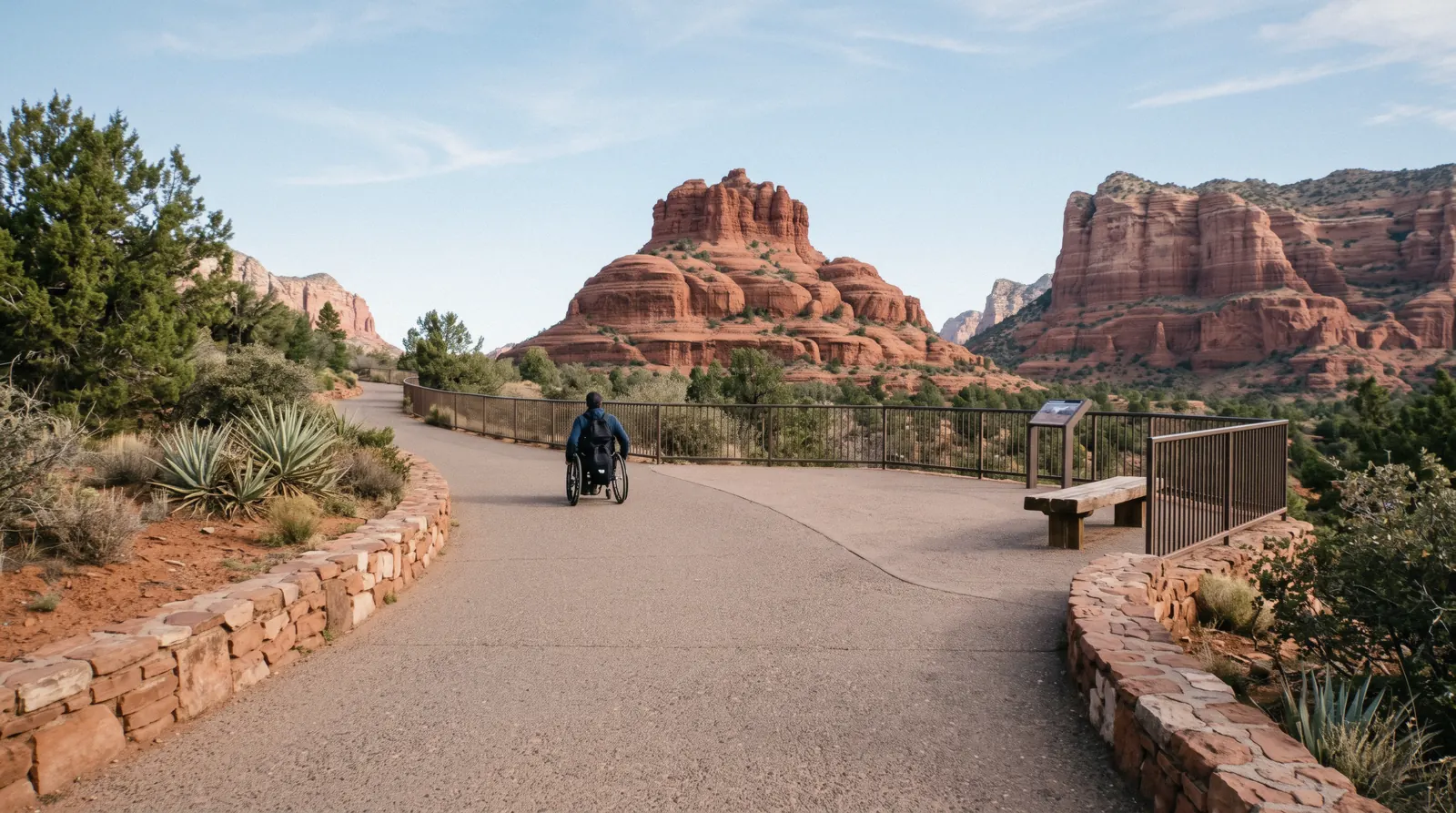
Sedona Accessibility: What Is Reachable, and What Is Not Published
Sedona accessibility information is thin and scattered, and this page would rather say that plainly than paper over it with a generic checklist. Arizona State Parks' own accessibility page states it is still "under construction while the ADA team collects information at each of our parks." The City of Sedona maintains a formal ADA program with a grievance procedure, but its pages returned an access error to every fetch attempt in this research. What follows is what is confirmed, tour by tour and venue by venue, plus an honest list of what nobody has published, read in Q3 2026.
Quick answer The shuttle, three wheelchair-accessible tours, and a real gap in published information
The Sedona Shuttle states plainly on its own page that it is wheelchair accessible, and three tours in this guide's inventory are listed by their operators as wheelchair accessible: a train-based Grand Canyon trip, the Verde Canyon Railroad, and a private scenic van tour. Beyond those, official accessibility information for Sedona's trails, state parks and named attractions is largely unpublished; Arizona State Parks says so about its own network directly.
Key takeaways
- For a scenic outing that needs no walking at all, the Verde Canyon Railroad is wheelchair accessible per the operator's own listing.
- The free Sedona Shuttle is wheelchair accessible, but it serves only five trailheads, not the town center or the state parks.
- Most jeep and van tours in this guide explicitly state they are not wheelchair accessible; check the tour accessibility table before booking rather than assuming.
- Red Rock State Park has no published accessibility detail on Arizona State Parks' own ADA page, which states the page is still under construction.
Which tours are actually wheelchair accessible
Every operator listing in this guide's tour inventory states its own wheelchair position; this table pulls that field directly rather than guessing from the tour type, checked in Q3 2026.
Three tours state wheelchair access outright. Most of the rest state the opposite, usually because the vehicle itself, an open-top Jeep or a trolley, has no accessible boarding.
| Tour | Vehicle | Operator's own wheelchair statement | Price |
|---|---|---|---|
| Verde Canyon Railroad | Vintage train, indoor and open-air cars | Wheelchair accessible | from $186 |
| Grand Canyon guided tour and historic railway | Train plus touring van | Wheelchair accessible | from $350.42 |
| Private scenic tour with lunch | Private van | Wheelchair accessible | from $339 |
| Boynton Canyon Trolley Tour | Historic wooden trolley | Not accessible, per the operator | from $27.60 |
| Cathedral Rock Vortex E-Bike Tour | Guided e-bike | Not accessible, excludes wheelchair users | from $185 |
| Standard Pink Jeep sightseeing tours | Open-top Jeep | Not stated on most listings; several state not suitable for mobility impairments | from $99 |
The pattern holds across the rest of this guide's inventory: any tour built around an open-top Jeep, a historic trolley or an e-bike either states outright that it is not wheelchair accessible or leaves the field blank. A train-based or van-based tour is the more reliable bet, and the three at the top of this table are the only ones in the full inventory that state accessibility as a positive fact rather than a silence.
What you can see without a trail
Oak Creek Canyon's scenic drive along Highway 89A needs no walking at all to see; the canyon's overlooks are reachable by car, and the drive itself is the point for a visitor who cannot manage trail terrain. The Chapel of the Holy Cross sits above a small parking area with a paved approach path to the building, though neither the chapel's own site nor the parish's page publishes a formal accessibility statement, so this guide states what the path looks like rather than certifying it as step-free.
Tlaquepaque Arts and Shopping Village is a walkable courtyard on paved and cobbled surfaces; no official accessibility statement is published for its walkways either, so uneven cobblestone sections should be expected rather than assumed away. Sedona Heritage Museum, a house-museum setting on Jordan Road, likewise carries no published accessibility detail; call ahead if step-free access to every room matters to the visit.
Of the named hiking trails in this guide, Bell Rock Pathway has the gentlest surface, a wide, hard-packed path with only 185 feet of elevation change over 3.5 miles, described by the Forest Service as family-friendly. That is a description of grade and surface, not an ADA certification; no Coconino National Forest trail page in this guide's research carries a formal accessibility label.
Where the official pages simply do not say
Arizona State Parks' own accessibility page is direct about the gap: it states the agency's "accessibility pages are currently under construction while the ADA team collects information at each of our parks," and names accessible cabins and camping at several parks statewide without listing Slide Rock or Red Rock State Park among them. Neither park's own facility page adds accessibility detail beyond that statewide page, so this guide cannot state whether either park's swim area, trail or visitor center meets a step-free standard. Contacting the ADA coordinator directly, at access@azstateparks.gov or 602-542-7389, is the agency's own suggested path for a specific accessibility question.
The City of Sedona maintains its own ADA program on sedonaaz.gov, including an ADA overview, a city ADA code, an improvements page and a formal grievance procedure, based on the page structure this guide could see; every direct fetch attempt to the pages themselves returned an access error during this research, so their specific content could not be read or quoted here. That is a limitation of this research pass, not a claim that the city publishes nothing; readers who need a specific city facility's accessibility confirmed should go to sedonaaz.gov directly or call the city.
Montezuma Castle and Tuzigoot, the two national monument day trips in this guide, are both National Park Service sites; their own fee pages, read for this guide's day-trip pages, do not carry accessibility detail either, which is consistent with the pattern across nearly every official Sedona-area page this research touched.
Altitude, heat, and pacing for a visitor who cannot hike
Sedona sits at roughly 4,500 feet, Visit Sedona's own published figure (no official city benchmark elevation exists for the town, a gap covered on the elevation note on this guide's homepage research). That is a moderate altitude, not the thin air of Flagstaff at nearly 6,800 feet or the Grand Canyon's South Rim at 7,000 feet, but it is enough that a visitor managing a heart or lung condition should pace the first day rather than assume sea-level stamina applies.
The National Weather Service's regional heat guidance, avoiding strenuous activity outside the 4:00 to 7:00 am window and drinking 1 to 2 liters an hour outdoors, applies at least as much to a visitor for whom "strenuous" includes a short walk from a parking lot to an overlook. None of the scenic drives or the wheelchair-accessible tours above require that kind of exertion, which is the practical reason they are the strongest options on this page for a visitor who cannot or would rather not hike.
A private van tour, rather than a shared shuttle tour, is worth the price difference for anyone who needs to set their own pace or stop for a rest; the operator sets no fixed schedule for a private booking the way a shared-group departure does.
Parking, restrooms and rest points
No page this guide reached, from Coconino National Forest's trailhead pages to Arizona State Parks' facility pages for Slide Rock and Red Rock State Park, publishes a count or a spec for accessible parking spaces at a specific Sedona-area trailhead. That is a real gap for a visitor planning a trip around a wheelchair-accessible space, not a detail this guide can fill in from a trail photo or a secondhand account.
What is confirmed is more limited: the Red Rock Ranger Visitor Center, 8375 State Route 179, sells the Red Rock Pass in person and is the closest thing to an official contact point for a specific accessibility question about a Coconino trailhead, though its own hours are not published on the Forest Service's program page either. Restroom facilities exist at the major state parks and at some trailheads, but neither azstateparks.com nor the individual Coconino trail pages in this guide's research describe them as accessible or not; treat any restroom on this page's trail list as unconfirmed for accessibility rather than assuming a vault toilet meets a step-free standard.
The practical workaround this guide can offer is calling ahead. Arizona State Parks' ADA coordinator, at access@azstateparks.gov or 602-542-7389, and the Red Rock Ranger Visitor Center, at 928-203-2900, are the two direct lines available for a specific parking or restroom question this page cannot answer from a published source.
Neighborhood terrain, in general terms
No official survey grades Sedona's sidewalks or street terrain by accessibility, so this section describes the geography as it is, not as a certified accessible route. Uptown Sedona, the walkable shopping strip along the north end of town, sits on a noticeably sloped stretch of Highway 89A with stairs in places between the road and some shopfronts; it is the most walkable district in the sense of density, not necessarily the flattest. West Sedona runs along a flatter, wider commercial stretch of 89A with strip-mall style parking directly at storefronts, which suits a wheelchair or a walker better than Uptown's tighter, sloped sidewalks in several spots. Village of Oak Creek, south of town, sits on flatter subdivision terrain again, closer in character to West Sedona than to Uptown.
None of this is a substitute for checking a specific hotel or restaurant's own accessibility before booking; it is only a general read on which part of town has gentler grades if terrain matters to where you stay. Where to stay covers the same three areas from a lodging and drive-time angle.
Grand Canyon: the most accessibility-documented day trip
Of every site referenced in this guide's research, Grand Canyon National Park publishes the most detailed accessibility information by a wide margin, which makes it worth its own section for a Sedona-based visitor weighing a day trip. All park shuttle buses on the South Rim are wheelchair accessible, per the park's own page, with ramps and a designated wheelchair space, though a wheelchair wider than 30 inches or longer than 48 inches, and most motorized scooters, will not fit. A Scenic Drive Accessibility Permit, available at entrance gates and visitor centers, opens some roads normally closed to public traffic for visitors with mobility challenges, though the park is explicit that the permit does not itself grant handicap parking without a separately issued state placard.
The park also states plainly that many of its facilities are historic structures built before modern accessibility standards, and that the terrain along much of the rim is rugged and narrow with steep drop-offs, a genuine caution rather than boilerplate. A dedicated Accessibility Guide, a 2018 PDF, is available for download from the park's own site and in paper form at the Grand Canyon Visitor Center, the Yavapai Museum of Geology and the Desert View Visitor Center.
Set against the near-total silence from Arizona State Parks and the City of Sedona on the same questions, Grand Canyon is the one day trip in this guide where a visitor with a mobility need can plan from an actual official document rather than working around a gap.
Who to contact for a specific question
This page has named several contact points across its sections; collected in one place, they are the fastest route to an answer this guide could not confirm from a published page.
- Arizona State Parks ADA coordinator: access@azstateparks.gov or 602-542-7389, for a specific Slide Rock or Red Rock State Park accessibility question.
- Red Rock Ranger Visitor Center: 928-203-2900, 8375 State Route 179, for Coconino National Forest trailhead questions, including parking and restroom facilities.
- Grand Canyon National Park: through the park's own contact page, for the Scenic Drive Accessibility Permit or a copy of the park's Accessibility Guide.
- Chapel of the Holy Cross: 928-282-7545 or chapel@sjvsedona.org, for a direct answer on the path and parking the chapel's own site does not describe.
- Sedona Visitor Center: 928-282-7722, 331 Forest Road, for a general first call on anything this page could not resolve from an official source.
A day built around limited mobility
One way to string the confirmed pieces above into an actual day: start with the Oak Creek Canyon scenic drive along Highway 89A in the cooler morning hours, a route that needs no walking and covers the same canyon scenery West Fork Trail hikers see on foot, from the car. Stop at whichever overlook pullouts suit the visit; none of them carries a published accessibility rating, so treat each stop as a judgment call based on what the parking area looks like on arrival rather than a guarantee.
Midday, the Chapel of the Holy Cross is a reasonable second stop: free, open by 9:00 am, with a short paved approach from its small parking area, though neither the chapel nor its parish publishes a formal accessibility statement, so call ahead, at 928-282-7545, if a specific concern needs confirming before the drive out. Tlaquepaque's courtyard, a mix of paved and cobbled surfaces with no official accessibility statement either, works as a third stop for browsing rather than a hike, best visited before the afternoon heat builds.
For the afternoon or a second day, one of the three wheelchair-accessible tours in this guide, the Verde Canyon Railroad in particular, converts an entire outing into a seated, scenic experience with no terrain question at all. That combination, a scenic drive, two walkable stops on paved or near-paved ground, and one accessible tour, covers a genuine day in Sedona without relying on a single trail this guide could confirm as step-free.
The three tours that state wheelchair access directly
Prices and the operators' own wheelchair statements, checked in Q3 2026.
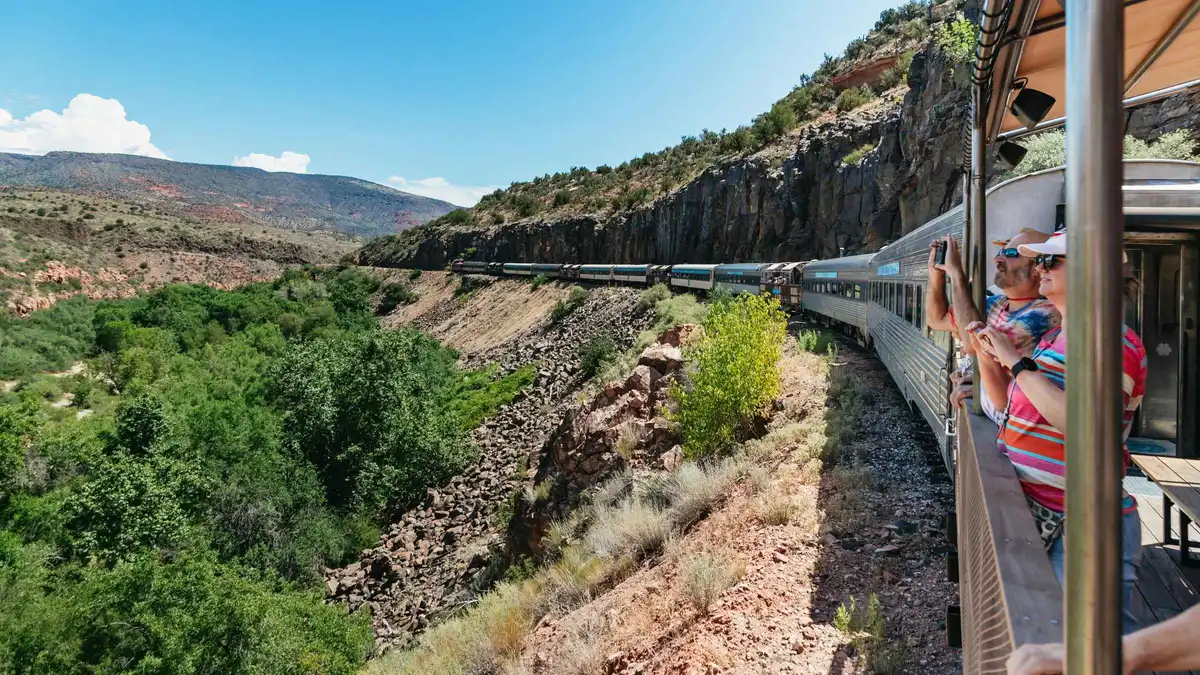 from $186
Clarkdale: Verde Canyon Railroad Train Ticket
A 4-hour round-trip train ride from Clarkdale through the Verde Canyon to Perkinsville, with indoor seating plus open-air viewing cars and an on-board champagne toast. Suits travelers who want a scenic ride rather than a hike, including those who cannot manage trail terrain.
Check Availability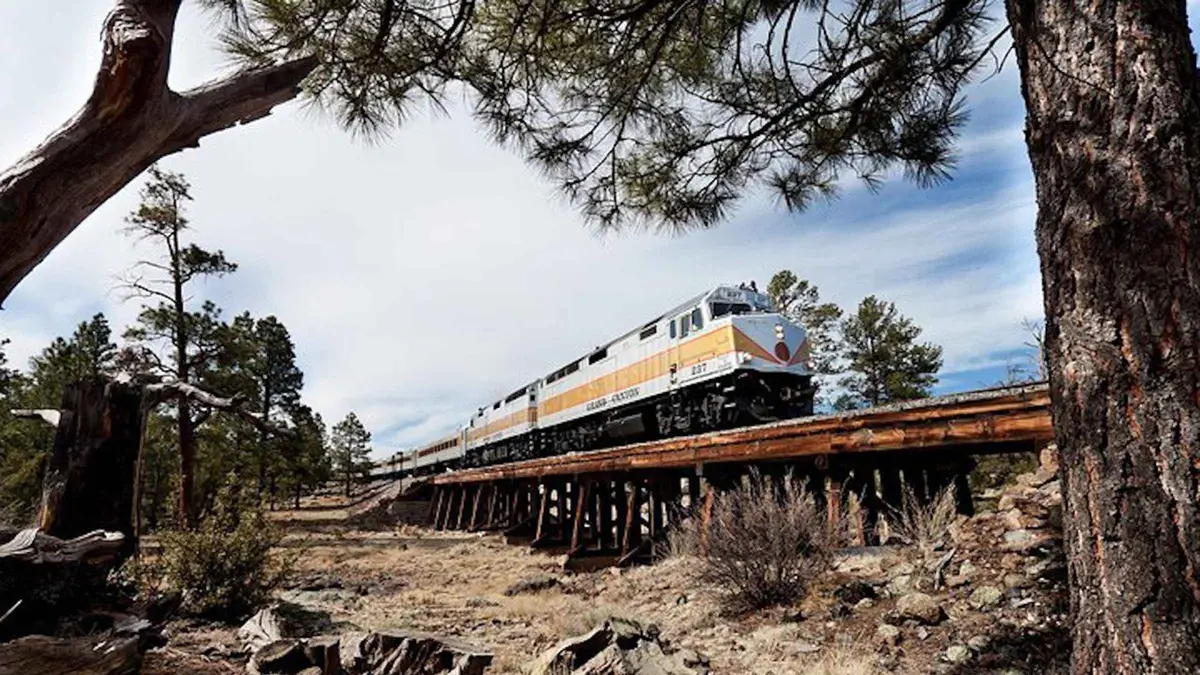 from $350.42
Sedona, AZ: Grand Canyon Guided Tour and Historic Railway
A one-way historic railway ride to the Grand Canyon followed by a guided van tour of the South and East Rims, combining two ways of reaching the canyon in a single day. Suits train enthusiasts who want the railway experience as part of the visit, not just the destination.
Check Availability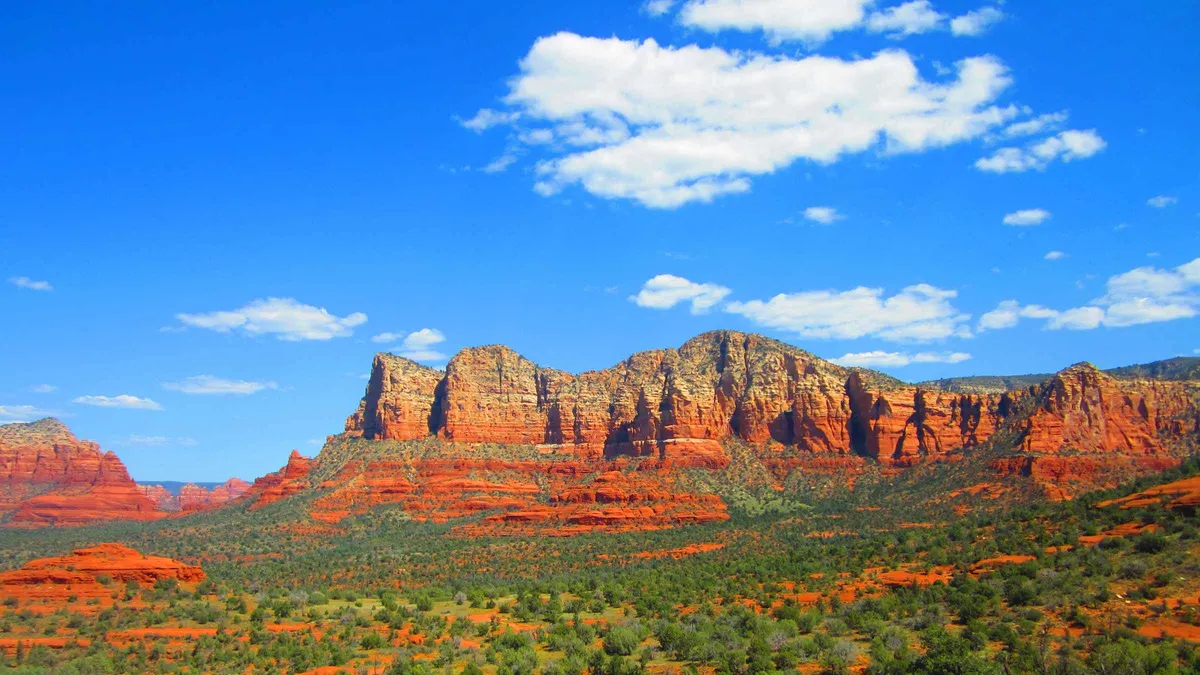 from $339
Sedona: Private Scenic Tour with Lunch
A private, 8-hour driven itinerary covering Cathedral Rock, Bell Rock, Courthouse Butte, Tlaquepaque and a restaurant lunch, with the pace set by the traveler rather than a shared-group schedule. Suits travelers who want a single private guide for a full day rather than piecing together separate short tours.
Check AvailabilityPrices, ratings and details are the platform's own, checked in Q3 2026; dollar figures are the listed prices — the platform bills in your account's currency.
Related planning pages
Accessibility touches transport and pacing more than any single sight; these pages carry the rest of that logistics.
Getting around Sedona
How the free shuttle and driving options fit together for a visitor who needs step-free transport, on getting around.
Car, shuttle and rideshareSedona hiking safety
The same heat and pacing guidance referenced above, in full, on hiking safety.
Heat and altitude guidanceWhere to stay in Sedona
Which area keeps you closest to the flatter attractions and the accessible tours' meeting points, on where to stay.
Neighborhood by neighborhoodSedona accessibility: questions
Is Sedona handicap accessible?
Unevenly. The free Sedona Shuttle and three tours in this guide's inventory (the Verde Canyon Railroad, a Grand Canyon rail-and-van trip, and a private scenic van tour) state wheelchair access directly. Most named hiking trails and both nearby state parks publish no formal accessibility statement at all; see the gaps in published information.
What can I do in Sedona if I cannot hike?
The Oak Creek Canyon scenic drive needs no walking, and the three wheelchair-accessible tours in the tour table cover a canyon railway, a Grand Canyon day trip and a private scenic van outing. Tlaquepaque's courtyard and the Chapel of the Holy Cross are both walkable on paved or near-paved surfaces, though neither publishes a formal accessibility statement.
Which Sedona trail is the most accessible?
Bell Rock Pathway has the gentlest surface of any named trail in this guide, a wide, hard-packed path with only 185 feet of elevation change over 3.5 miles. No Coconino National Forest trail page carries a formal ADA label, so treat this as the best available surface, not a certified accessible trail.
Are Sedona's jeep tours wheelchair accessible?
Generally no. Most Pink Jeep and off-road tour listings in this guide either state outright that they are not accessible or say nothing about it, because the open-top vehicles have no accessible boarding. A train-based or private van tour is the more reliable option; see the tour accessibility table.
What is Sedona's elevation, and does it affect visitors with mobility or breathing conditions?
Roughly 4,500 feet by Visit Sedona's own published figure; no official city benchmark elevation exists. That is moderate, not extreme, but combined with dry air and summer heat it is enough to pace the first day carefully, covered in altitude and heat guidance.
Where can I find accessible parking spaces near Sedona's trailheads?
Not published. Neither Coconino National Forest's trailhead pages nor Arizona State Parks' facility pages for Slide Rock and Red Rock State Park state a count or a spec for accessible parking at any specific site; see parking, restrooms and rest points for the two direct contact lines this guide could find.
Which part of Sedona has the flattest terrain?
West Sedona's stretch of Highway 89A runs flatter and wider than Uptown's sloped, stair-cut sidewalks, with parking directly at most storefronts. This is a general geography read, not an official accessibility survey; see neighborhood terrain.
Sedona Accessibility on Video
Firsthand accounts of navigating Sedona with a wheelchair or limited mobility.
Sedona, Arizona: USA Southwest Wheelchair Travel
A wheelchair traveler's own account of navigating Sedona's sights and terrain.
Video: Wheelchair TravelingSedona's Most Accessible Red Rock Trail, Read Off the Agency's Own Surface Notes
A closer look at trail surface and grade on one of Sedona's gentler routes.
Video: Czyz AdventuresEasy Hikes in Sedona That Anyone Can Do
A roundup of lower-effort trail options, useful context alongside this page's surface notes.
Video: Traveling Artist MemoriesVideos load from YouTube only when you press play.
Reviewed Q3 2026 (July–September 2026); next review Q4 2026. Prices, hours and terms are set by the venue or operator and confirmed at checkout.
We may earn a commission if you book through one of our links, at no extra cost to you. Full affiliate disclosure